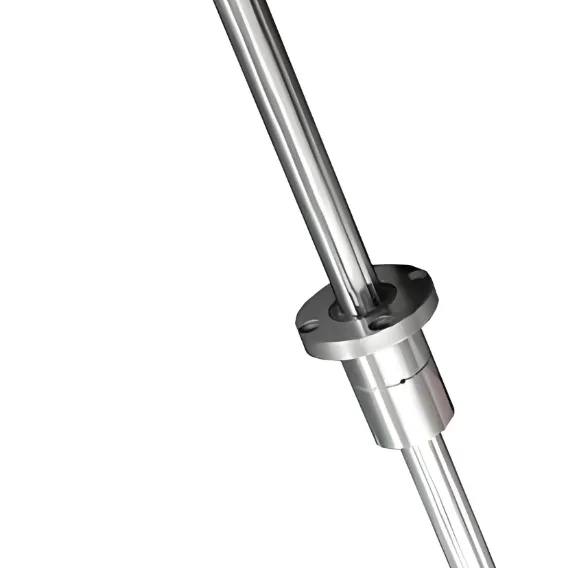
Ball screws are one of the most critical components in modern linear motion systems. From CNC machine tools and automation equipment to medical devices and electric actuators, different ball screw types are engineered to meet specific load, speed, accuracy, and service life requirements. Understanding how each type performs helps engineers and buyers select the most suitable solution for their application.
This guide provides a structured overview of the most common and specialized ball screw types, including high-precision, heavy-duty, miniature, and custom configurations.
What Defines Different Ball Screw Types?
Ball screw types are typically classified by manufacturing method, load capacity, lead design, size, and operating environment. While all ball screws convert rotary motion into linear motion with high efficiency, design differences directly affect accuracy, stiffness, speed capability, and durability.
For example, a high precision ball screw used in semiconductor equipment is fundamentally different from a heavy duty ball screw designed for industrial presses or lifting systems. Selecting the wrong type may result in premature wear, vibration, or insufficient positioning accuracy.
Rolled Ball Screw vs Ground Ball Screw
The most common classification is based on manufacturing technology.
A rolled ball screw is produced through cold rolling, making it cost-effective and suitable for medium-accuracy applications. Rolled designs are widely used in automation systems, packaging machines, and general industrial actuators. Standard models such as the SFU1204 ball screw, SFU1605 ball screw, SFU1610 ball screw, and SFU2005 ball screw fall into this category and are popular due to fast availability and stable performance.
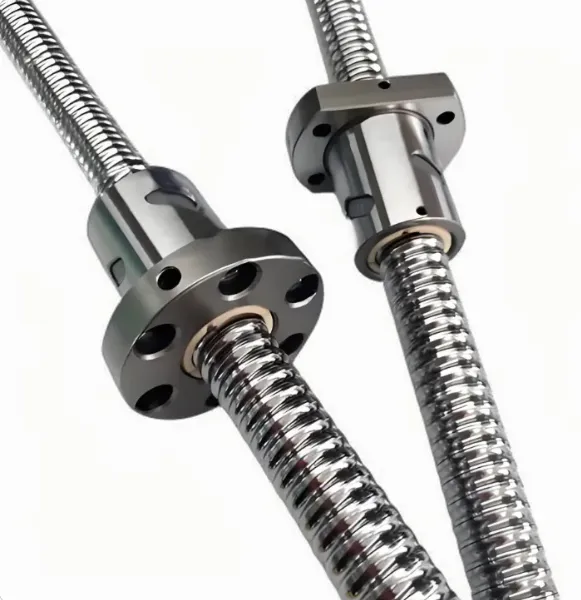
A ground ball screw, on the other hand, is manufactured using precision grinding. This process delivers superior lead accuracy, smooth motion, and excellent repeatability. Ground ball screws are the preferred choice for CNC machining centers, precision measuring equipment, and aerospace applications where micron-level accuracy is required.
High Precision and High Lead Ball Screws
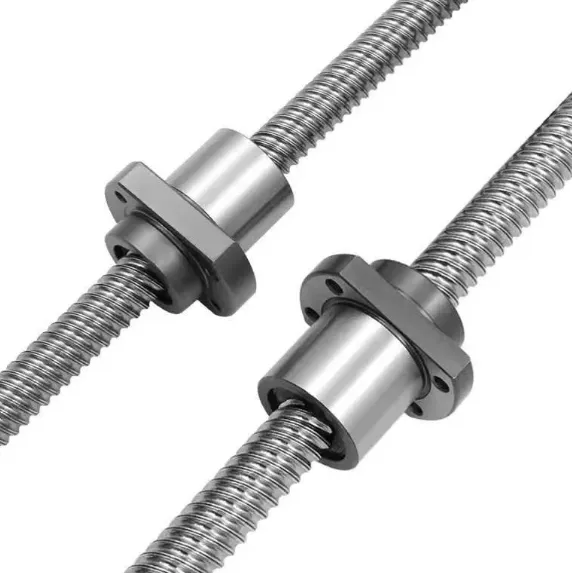
A high precision ball screw focuses on minimizing positioning error, backlash, and vibration. These screws are commonly preloaded and paired with matched ball nuts to achieve consistent performance under dynamic loads.
In contrast, a high lead ball screw is designed for speed rather than fine resolution. With a larger lead per revolution, high lead designs enable rapid linear movement, making them ideal for pick-and-place systems, fast actuators, and automated production lines. When combined, high precision and high lead designs are often used in advanced servo-driven systems where speed and accuracy must coexist.
Heavy Duty and Double Ball Screw Designs
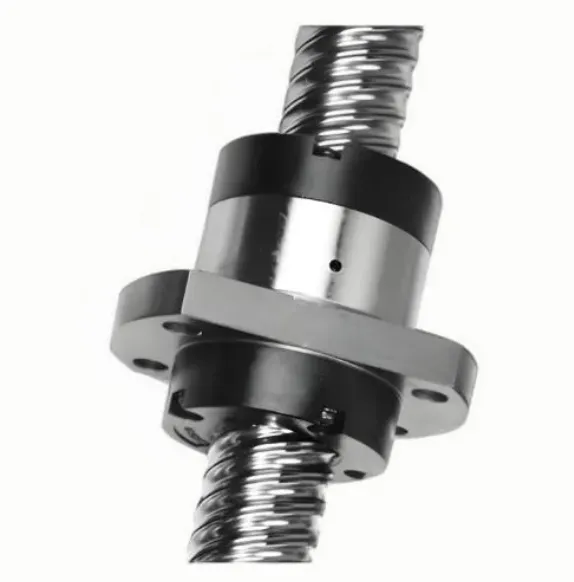
A heavy duty ball screw is engineered to handle high axial loads and shock conditions. These screws feature larger diameters, optimized ball circulation paths, and enhanced surface hardness. Heavy-duty solutions are widely applied in industrial lifting platforms, injection molding machines, and large automation equipment.
For applications requiring even greater load capacity and stiffness, a double nut ball screw configuration is used. By distributing the load across two ball nuts or parallel screw systems, double designs improve rigidity and reduce deflection, especially in long-stroke or high-force environments.
Bidirectional and Actuator Ball Screws
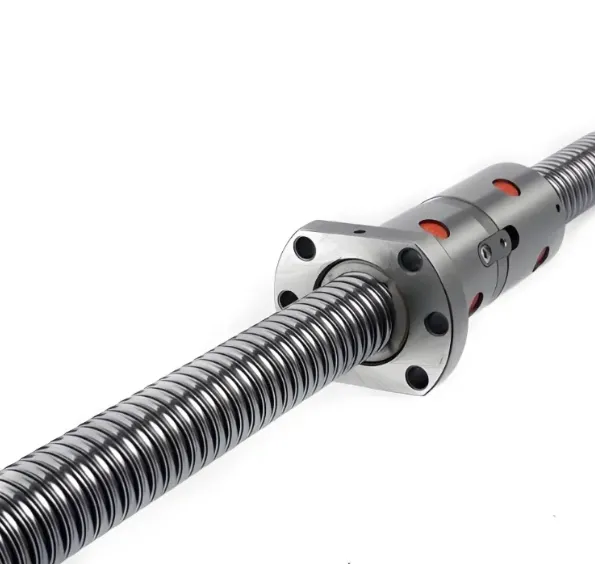
A bidirectional ball screw is designed to maintain consistent performance in both forward and reverse motion. This feature is particularly important in positioning systems that require frequent direction changes, such as robotics and CNC axes.
An actuator ball screw is typically integrated into linear actuators, electric cylinders, or electromechanical lifting systems. These screws are optimized for compact installation, long service life, and smooth operation. Many actuator ball screw designs are custom-engineered to match motor torque, stroke length, and duty cycle requirements.
Planetary Ball Screw Technology
A planetary ball screw is a specialized solution for extremely high load and long service life applications. Instead of recirculating balls, multiple threaded rollers or planetary elements share the load, significantly increasing load capacity and reducing contact stress.
Planetary designs are commonly used in aerospace actuators, heavy industrial presses, and high-force motion systems where standard ball screws may reach their mechanical limits.
Micro and Miniature Ball Screws
At the opposite end of the scale, micro ball screw and miniature ball screw designs serve compact, lightweight applications. These screws are widely used in medical devices, optical instruments, semiconductor equipment, and precision electronics.
Despite their small size, miniature ball screws can still deliver excellent positioning accuracy and efficiency. Material selection, surface finish, and lubrication become especially critical at this scale to ensure reliability and smooth motion.
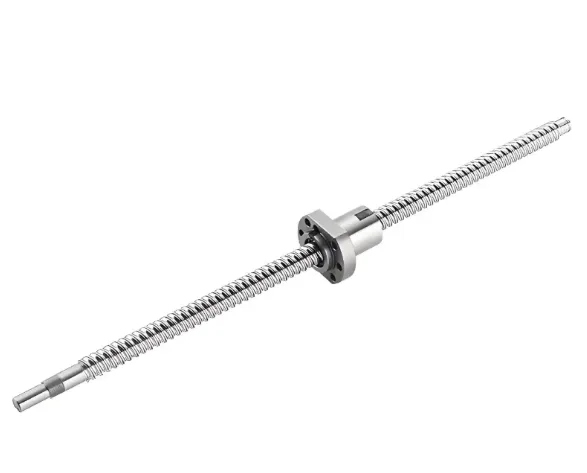
Stainless Steel and Custom Ball Screws
A stainless steel ball screw is designed for corrosive, cleanroom, or hygienic environments. These screws are commonly used in food processing equipment, medical machinery, marine systems, and chemical applications where corrosion resistance is essential.
For specialized requirements, a custom ball screw solution may be the best option. Customization can include non-standard lead values, special nut designs, integrated end machining, preload tuning, or coatings for extreme environments. Custom ball screws allow engineers to optimize performance while fitting unique mechanical constraints.
Choosing the Right Ball Screw Type
Selecting the right ball screw involves balancing accuracy, load capacity, speed, environment, and budget. Standard models such as SFU series screws provide excellent value for general automation, while ground or planetary designs are better suited for high-end precision or heavy-duty systems.
Understanding the differences between rolled, ground, miniature, heavy-duty, and actuator ball screw types helps ensure long-term reliability and optimal system performance.
Author & Bio
Author: Daniel Foster
Title: Senior Motion Control Engineer
About the Author:
Daniel Foster is a senior motion control engineer with over 12 years of experience in linear motion systems, CNC machinery, and industrial automation. He specializes in ball screw selection, actuator design, and precision transmission components. Daniel has worked closely with OEM manufacturers and automation integrators to develop custom ball screw solutions for high-precision and heavy-duty applications worldwide.