In the field of industrial automation, CNC machinery, and precision motion control, linear motion systems play a critical role in determining accuracy, speed, and overall equipment performance. Two of the most frequently compared solutions are the linear module and the linear guide. Although they are closely related and often used together, they are not the same product and serve different purposes within a motion system.
This article provides a clear and practical comparison of linear module vs linear guide, helping engineers, purchasers, and decision-makers understand their differences, applications, and how to choose the right solution.
What Is a Linear Guide?
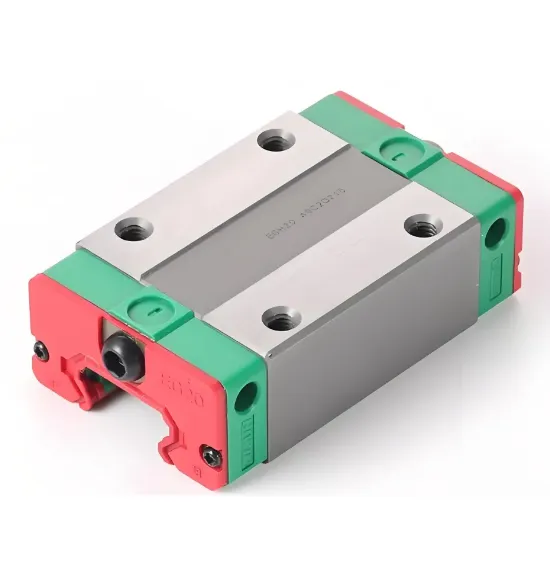
A linear guide (also known as a linear guideway or linear rail system) is a precision mechanical component designed to support and guide moving loads along a straight path with minimal friction. It typically consists of a guide rail and one or more sliding blocks, which use rolling elements such as balls or rollers to achieve smooth motion.
Key Functions of a Linear Guide
Provides high-precision linear motion
Reduces friction compared to sliding mechanisms
Supports loads in multiple directions (radial, lateral, and moment loads)
Maintains accuracy over long travel distances
Common Applications
Linear guides are widely used in:
CNC machine tools
Industrial robots
Automation equipment
Semiconductor manufacturing
Medical devices
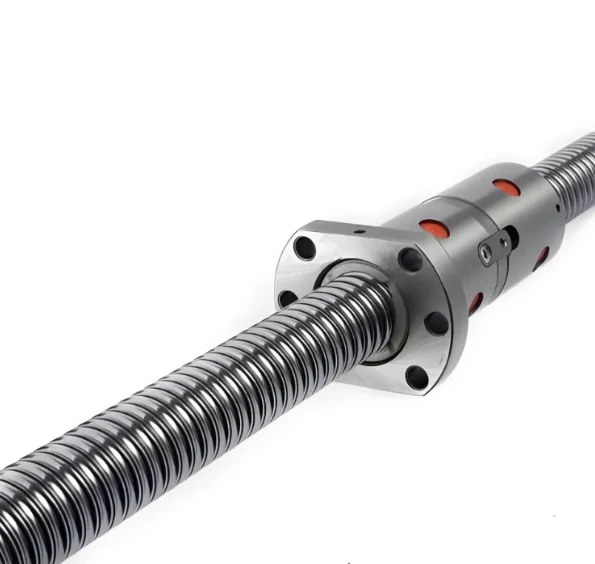
On their own, linear guides do not generate motion. They must be paired with a driving system such as a ball screw, belt drive, or linear motor.
What Is a Linear Module?
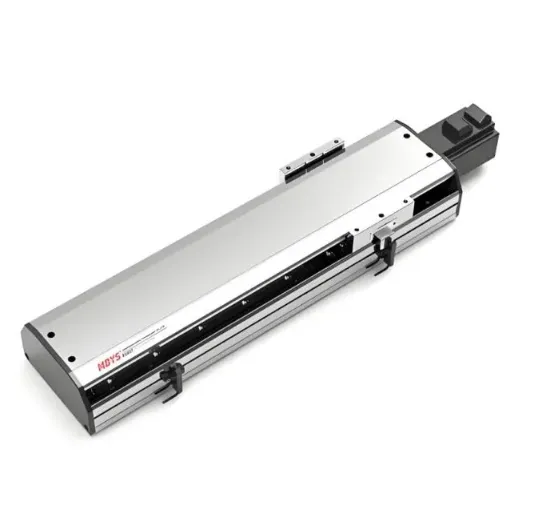
A linear module (also called a linear actuator or linear motion module) is a complete linear motion unit that integrates multiple components into a single, compact assembly. A typical linear module includes:
-
Linear guides
-
Drive system (ball screw, timing belt, or linear motor)
-
Motor (optional or customer-supplied)
-
Aluminum housing or frame
-
Dust cover or protective structure
In essence, a linear module is a plug-and-play linear motion solution.
Key Functions of a Linear Module
-
Provides both guidance and driving force
-
Simplifies system design and installation
-
Ensures consistent performance through integrated engineering
-
Reduces alignment and assembly time
Common Applications
Linear modules are commonly used in:
-
Automated assembly lines
-
Pick-and-place systems
-
Packaging machinery
-
3-axis and multi-axis motion systems
-
Industrial inspection equipment
Linear Module vs Linear Guide: Core Differences
Understanding the difference between a linear module and a linear guide starts with recognizing their system roles.
1. Level of Integration
-
Linear guide: A single functional component focused on guidance
-
Linear module: A fully integrated motion system combining guidance and drive
2. Motion Capability
-
Linear guide: Cannot move independently; requires an external drive
-
Linear module: Provides complete linear motion when powered
3. Installation Complexity
-
Linear guide: Requires precise alignment with screws, motors, couplings, and mounts
-
Linear module: Easier installation with standardized interfaces
4. Customization and Design Flexibility
-
Linear guide: Highly flexible; suitable for custom machine designs
-
Linear module: More standardized but faster to deploy
5. Cost Structure
-
Linear guide: Lower initial unit cost but higher system integration cost
-
Linear module: Higher upfront cost but lower engineering and assembly expense
Performance Comparison: Accuracy, Speed, and Load
Accuracy
Both linear guides and linear modules can achieve high positioning accuracy. However:
-
Accuracy in a linear guide system depends heavily on assembly quality and alignment
-
A linear module offers more stable and predictable accuracy due to factory integration
Speed
-
Belt-driven linear modules generally provide higher speeds
-
Ball screw linear modules and linear guide + ball screw systems offer high precision at moderate speeds
Load Capacity
-
Heavy loads and high moment loads may favor custom linear guide systems
-
Many linear modules are optimized for medium loads with compact designs
When Should You Choose a Linear Guide?
A linear guide is the better choice when:
-
You are designing a custom machine or special structure
-
You need maximum flexibility in layout and component selection
-
Your application involves heavy loads or long travel
-
You already have in-house engineering and assembly capabilities
Linear guides are ideal for experienced machine builders who want full control over system design.
When Should You Choose a Linear Module?
A linear module is the right solution when:
-
You need fast deployment and reduced engineering time
-
Space is limited and a compact design is required
-
You want consistent quality and simplified maintenance
-
You are building multi-axis systems with standardized components
Linear modules are especially popular in automation lines where efficiency, repeatability, and scalability matter.
Linear Module vs Linear Guide in Real-World Automation
In modern automation projects, the choice between a linear module and a linear guide often depends on project stage and business goals, not just technical performance.
-
Startups and system integrators often prefer linear modules to reduce development time
-
OEM machine builders may prefer linear guides for long-term cost control and customization
-
High-volume production lines typically benefit from the reliability and consistency of linear modules
In many cases, linear guides are actually embedded inside linear modules, meaning the two products are complementary rather than competing.
Final Thoughts: Which One Is Better?
There is no universal winner in the comparison of linear module vs linear guide. The better choice depends on:
-
Application requirements
-
Budget and timeline
-
Engineering resources
-
Desired level of system integration
If you need flexibility and customization, choose a linear guide. If you want speed, simplicity, and reliability, a linear module is the smarter option.
Understanding these differences helps you build more efficient, accurate, and cost-effective linear motion systems.
Author
David Chen
Senior Motion Control Engineer
About the Author
David Chen is a senior motion control engineer with over 12 years of experience in linear motion systems, industrial automation, and CNC machinery. He specializes in linear modules, linear guides, ball screws, and multi-axis automation solutions. David has worked closely with OEM manufacturers and system integrators to optimize motion performance and reliability in demanding industrial environments.