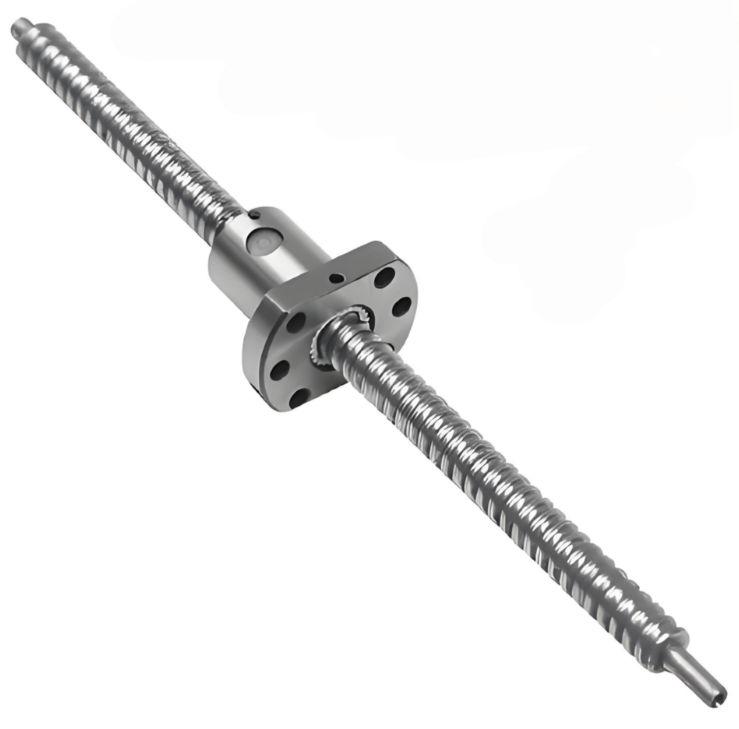
Ball screw design plays a critical role in modern precision motion systems. From CNC machine tools and industrial automation to robotics and semiconductor equipment, a well-designed ball screw directly determines positioning accuracy, load capacity, efficiency, and service life. Unlike lead screws that rely on sliding friction, ball screws use rolling balls to transmit force, achieving high mechanical efficiency and repeatability. This article explores the fundamentals of ball screw design, key parameters, common design challenges, and best practices to help engineers select or customize the right solution for their applications.
What Is Ball Screw Design and Why It Matters
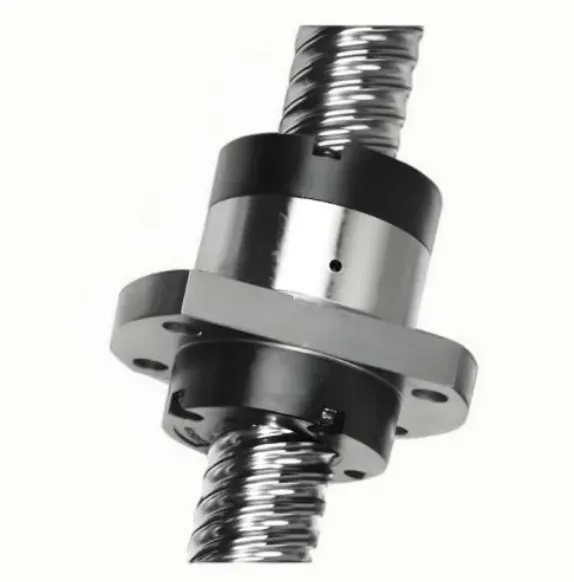
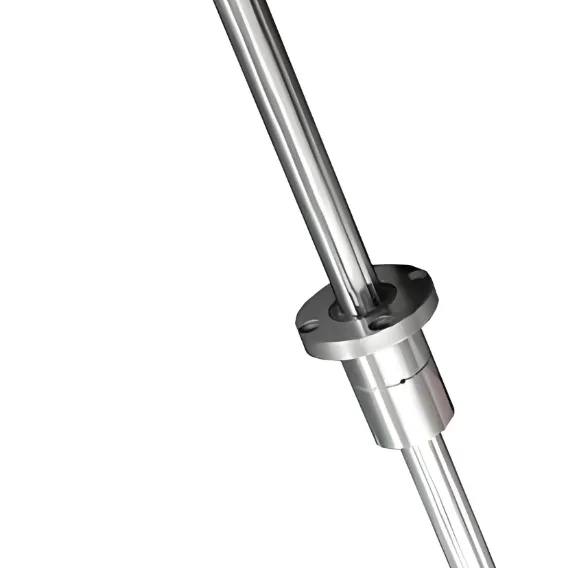
At its core, ball screw design refers to the engineering of the screw shaft, nut, ball circulation system, and supporting components to convert rotary motion into precise linear motion. A properly designed ball screw can reach efficiencies above 90%, significantly reducing driving torque and heat generation.
The importance of ball screw design lies in system-level performance. Poor design choices can lead to premature wear, vibration, noise, backlash, or even catastrophic failure. Conversely, an optimized ball screw design improves positioning accuracy, enhances stiffness, supports higher speeds, and minimizes maintenance costs. For high-precision industries, ball screw design is not a standard component choice but a critical part of the overall mechanical architecture.
Key Parameters in Ball Screw Design
Several core parameters define ball screw design and must be evaluated together rather than in isolation:
Lead (Pitch): The lead determines how far the nut travels per screw revolution. A smaller lead improves positioning resolution and thrust but limits speed, while a larger lead supports high-speed motion at the expense of torque and accuracy.
Diameter: Screw diameter directly affects load capacity, rigidity, and critical speed. Larger diameters improve stiffness and buckling resistance but increase inertia and cost.
Accuracy Grade: Ball screw design often follows international standards such as ISO or JIS accuracy grades. Higher accuracy grades provide tighter lead tolerances and better repeatability, which are essential for CNC and precision automation.
Preload: Preload eliminates axial backlash by applying internal pressure between the balls and raceways. Proper preload design increases stiffness but also raises friction and heat, requiring careful balance.
These parameters form the foundation of any reliable ball screw design strategy.
Load Analysis in Ball Screw Design
Load analysis is one of the most critical steps in ball screw design. Designers must consider not only the nominal axial load but also dynamic and external forces that affect performance over time.
Axial load includes the working thrust generated during operation, while radial loads—though typically undesirable—may occur due to misalignment or structural deflection. Moment loads caused by off-center forces can significantly reduce ball screw life if not properly addressed.
In professional ball screw design, engineers calculate equivalent dynamic load and static load to verify that the selected screw meets both fatigue life and safety requirements. Ignoring real operating conditions often results in under-designed systems that fail long before their theoretical lifespan.
Speed, Critical Speed, and Buckling Considerations
High-speed applications demand special attention in ball screw design. As rotational speed increases, the risk of vibration and resonance also rises. Critical speed is the rotational speed at which the screw begins to vibrate excessively due to its natural frequency.
Ball screw design must account for screw length, diameter, end support configuration, and mounting method to ensure operating speed remains safely below the critical speed threshold. Similarly, buckling analysis is essential for vertical or long-stroke applications, where compressive loads may cause instability.
Selecting appropriate end supports—fixed, supported, or floating—can dramatically improve critical speed and buckling resistance without changing the screw itself.
Ball Screw Nut and Circulation System Design
The nut and ball circulation system are central to ball screw design quality. Balls continuously circulate between the nut and screw through internal or external return paths, enabling smooth motion and load distribution.
Common circulation designs include internal deflectors, end caps, and external tubes. Each has advantages depending on speed, load, noise, and maintenance requirements. For example, internal circulation designs support higher speeds and quieter operation, while external tube designs are easier to maintain and inspect.
Material selection for the nut—typically alloy steel or specialized bearing steel—also influences wear resistance and long-term accuracy in ball screw design.
Lubrication and Sealing in Ball Screw Design
Lubrication is often underestimated in ball screw design, yet it has a direct impact on efficiency and service life. Proper lubrication reduces friction, prevents metal-to-metal contact, and protects raceways from corrosion.
Designers must select suitable lubrication methods, such as grease or oil, based on operating speed, temperature, and environment. Integrated lubrication ports and channels are common features in advanced ball screw design.
Sealing is equally important. Wipers, seals, and protective bellows prevent contaminants such as dust, chips, and coolant from entering the nut. In harsh industrial environments, robust sealing design can extend ball screw life by several times.
Common Ball Screw Design Mistakes to Avoid
Despite its maturity, ball screw design is still prone to recurring mistakes. One common issue is oversimplified selection based only on load and lead, ignoring speed, stiffness, and thermal effects. Another frequent error is excessive preload, which improves rigidity but accelerates wear and heat buildup.
Misalignment between the ball screw and linear guides is another critical design flaw. Even small angular errors can introduce unwanted radial forces, significantly reducing fatigue life. Professional ball screw design always considers system alignment, mounting accuracy, and structural rigidity as part of a complete solution.
Custom Ball Screw Design for Specialized Applications
Standard catalog products cannot meet every application requirement. Custom ball screw design becomes necessary for unique strokes, non-standard leads, extreme loads, or special environmental conditions.
Custom designs may include special materials, surface treatments, modified nut geometry, or integrated cooling features. In high-end equipment, ball screw design is often closely coordinated with servo motor selection, control algorithms, and structural analysis to achieve optimal system performance.
Working with an experienced ball screw manufacturer during the design phase can significantly reduce development risks and lifecycle costs.
Conclusion: Optimizing Performance Through Smart Ball Screw Design
Ball screw design is far more than choosing a screw and nut—it is a multidisciplinary engineering process that balances accuracy, load, speed, stiffness, and durability. A well-executed ball screw design enhances motion efficiency, improves reliability, and supports long-term operational stability across a wide range of industries.
By understanding key parameters, performing realistic load and speed analysis, and avoiding common design pitfalls, engineers can unlock the full potential of ball screw technology. Whether using standard components or pursuing custom solutions, thoughtful ball screw design remains a cornerstone of high-precision mechanical systems.