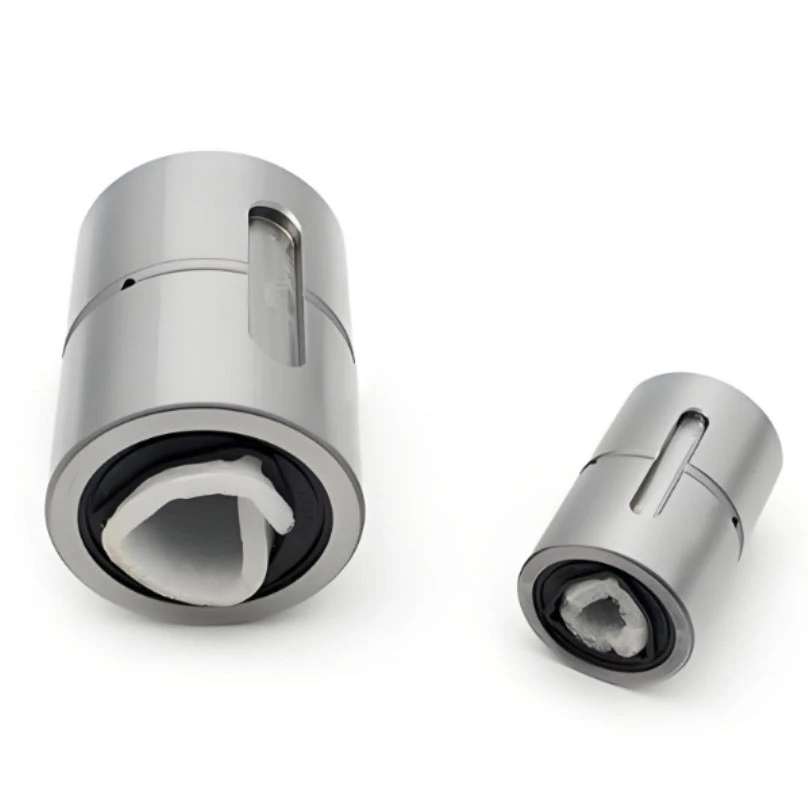
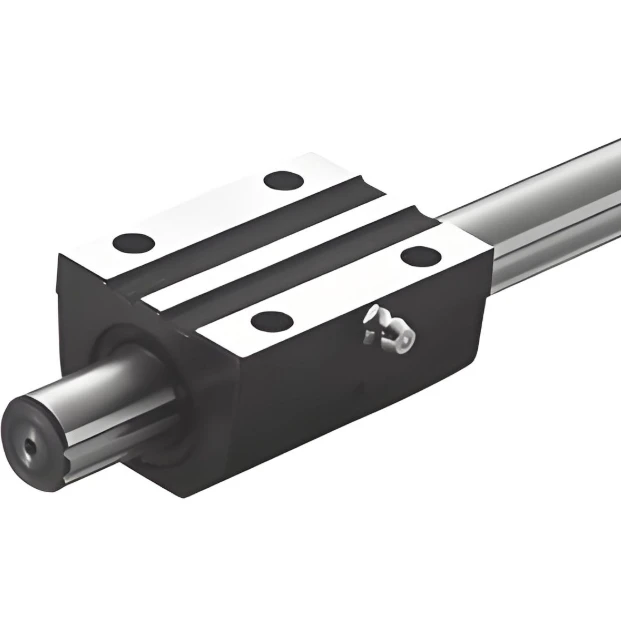
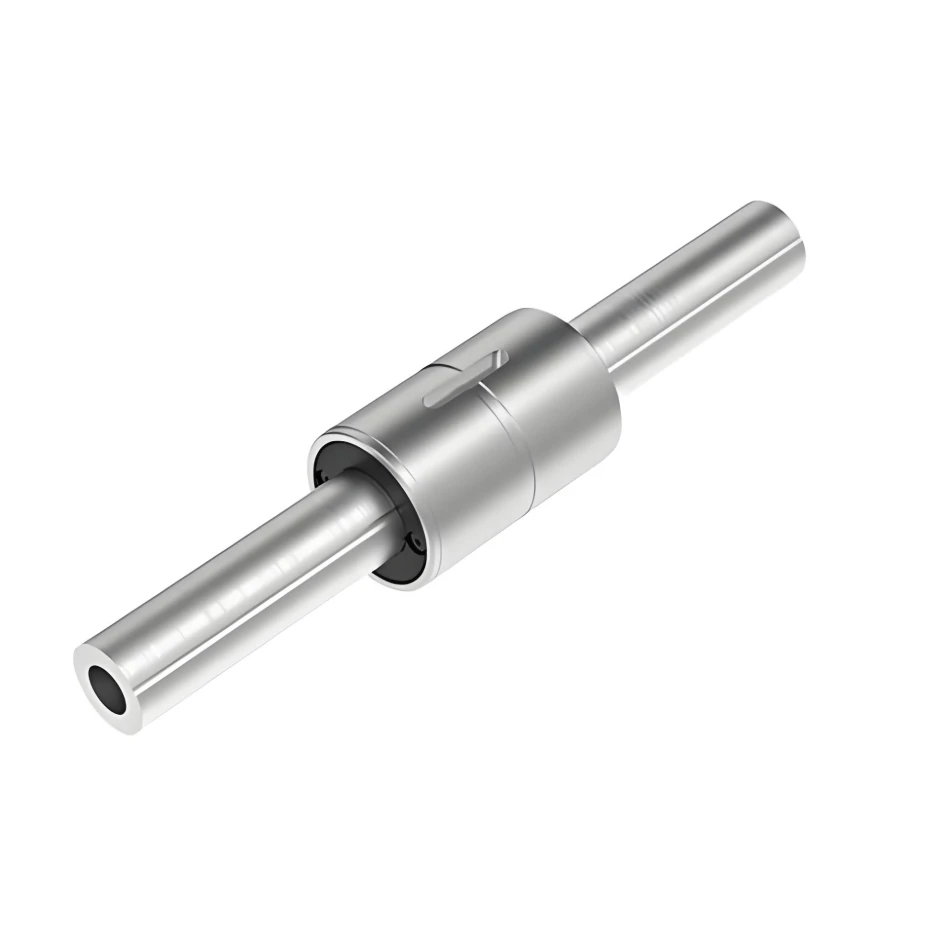
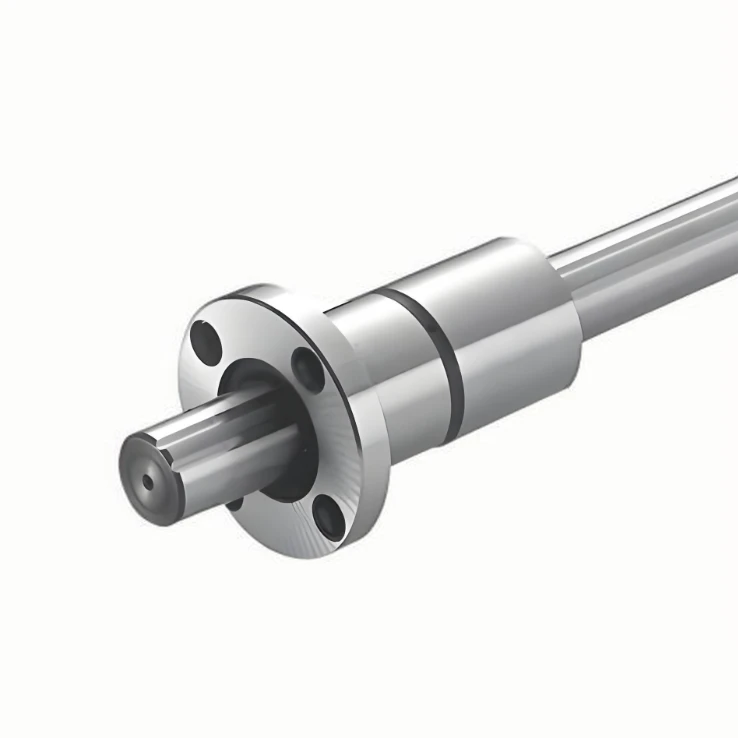
A ball spline is a mechanical linear motion component that enables both rotational and linear movement while maintaining high torque transmission. It consists of a grooved shaft (spline shaft) and a matching ball spline nut that contains recirculating ball bearings. These bearings roll along the grooves of the shaft, reducing friction and ensuring smooth, precise motion in both directions.
Ball splines are ideal for ball spline applications where torque must be transmitted during linear motion—such as in robotics, automatic assembly machines, pick - and - place systems, and precision medical equipment. Unlike standard splines or linear guides, a ball spline combines load - bearing linear motion with the ability to transmit high torque, even under high - speed or oscillating conditions.
Due to the rolling contact of the balls, ball splines offer low wear, long life, and minimal backlash. The compact design allows for space - saving installation, and the high load capacity ensures reliable performance under dynamic operating conditions. Ball splines can also be configured with features such as ball spline bearing, rotary encoders, or anti - rotation mechanisms for complex motion systems.
Ball splines are available in a variety of sizes, preload levels, and materials including carbon steel and stainless steel. They are typically precision - ground for high accuracy and may be treated with surface coatings for corrosion resistance or improved durability.

Ball Spline vs Ball Screw
When comparing ball spline vs ball screw, it’s important to understand that although both are precision linear motion components, they are designed to solve different mechanical problems. For manufacturers like Yidi, which supplies both ball splines and ball screws, these two products are often used together in advanced automation systems rather than competing directly.
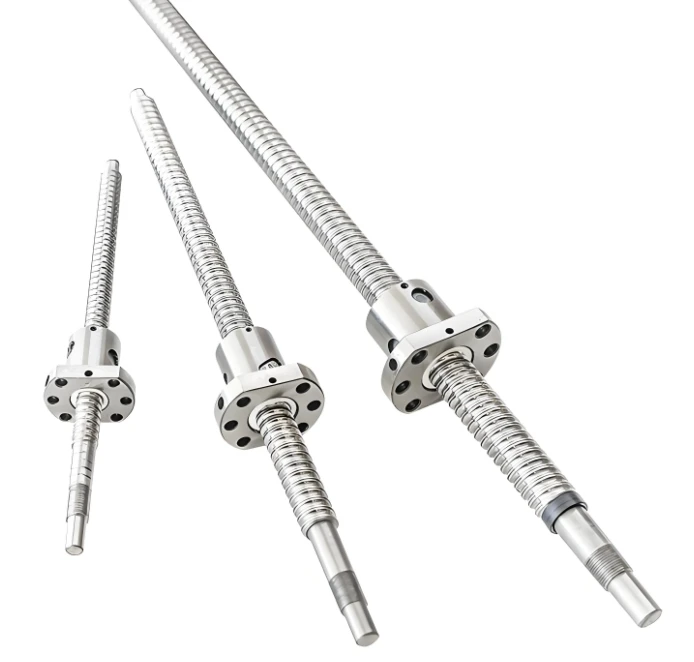
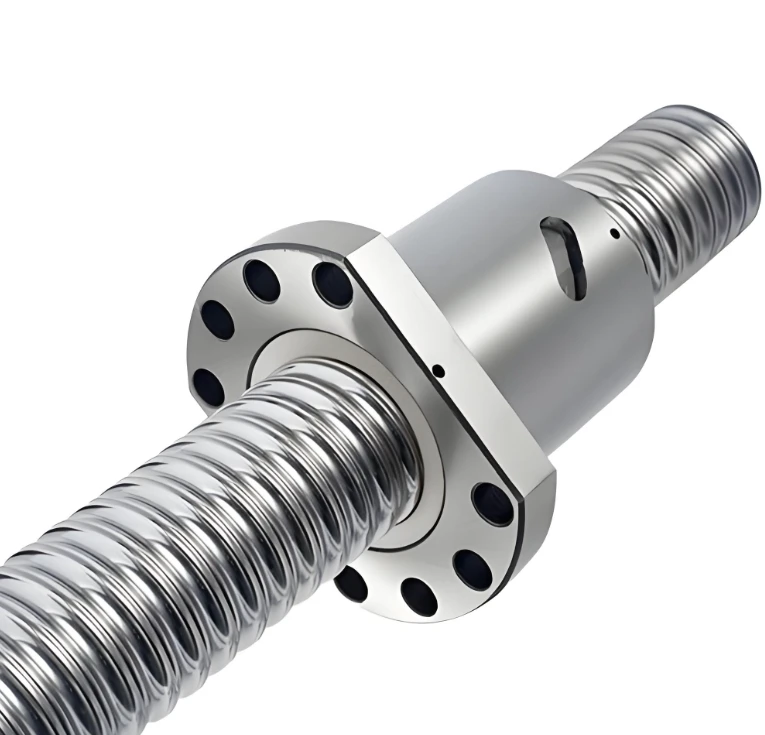
A ball screw bearing is primarily used to convert rotary motion into precise linear motion. It relies on recirculating steel balls between the screw shaft and the nut, dramatically reducing friction compared with traditional lead screws. This design allows Yidi ball screws to achieve high positioning accuracy, excellent repeatability, and strong load-carrying capacity. As a result, ball screws are widely used in CNC machine tools, robotic actuators, precision stages, and automated assembly equipment where accurate linear positioning and smooth motion are critical.
In contrast, a ball spline is designed to transmit torque while allowing linear movement. Structurally, it consists of a grooved shaft and a nut with circulating balls that engage the grooves. Yidi ball splines enable a shaft to slide back and forth while still resisting rotation, making them ideal for applications that require synchronized linear motion and torque transmission. Typical uses include pick-and-place systems, industrial robots, printing machinery, and automation equipment with complex multi-axis motion.
From a functional perspective, the key difference in ball spline vs ball screw lies in their roles. A ball screw focuses on motion conversion and positioning, while a ball spline focuses on anti-rotation and torque transfer during linear travel. Load characteristics also differ: ball screws excel at handling axial loads with high precision, whereas ball splines are optimized for combined radial loads and torsional forces.
In real-world industrial design, engineers often combine Yidi ball screws and ball splines in a single system. For example, a ball screw may drive linear movement, while a ball spline ensures that the moving component does not rotate and can transmit torque reliably. Understanding these differences helps designers select the right component, improve system stability, and extend service life.
In summary, ball spline vs ball screw is not about which is better, but which is more suitable. With Yidi’s full range of precision ball screws and ball splines, engineers can confidently choose—or combine—the right solution for high-performance linear motion systems.
Ball Spline Applications
Ball spline applications are widely found in modern industrial automation systems where precise linear motion and reliable torque transmission are required at the same time. Unlike conventional linear bearings, a ball spline allows a shaft to move smoothly in the axial direction while preventing rotation or actively transmitting rotational force. This unique capability makes ball splines an essential component in many high-precision and high-speed mechanical designs.
One of the most common ball spline applications is in industrial robots and robotic arms. In multi-axis robots, ball splines help ensure accurate positioning by guiding linear motion while maintaining rotational alignment. This is especially important in pick-and-place systems, welding robots, and assembly robots, where repeatability and stability directly affect production quality. The low friction and high rigidity of ball splines contribute to smoother motion and longer service life in continuous-duty environments.
Another important area of ball spline applications is CNC machinery and machine tools. In these systems, ball splines are often used for tool changers, rotary-linear tables, and auxiliary axes that require both linear travel and torque transfer. By integrating ball splines, designers can reduce mechanical complexity, eliminate additional guide mechanisms, and improve overall system efficiency.
Ball spline applications are also common in packaging, printing, and textile machinery. These industries demand synchronized motion, high-speed operation, and precise alignment. Ball splines help maintain accurate shaft positioning while supporting rapid acceleration and deceleration, which is essential for maintaining product consistency and reducing downtime.
In addition, ball splines are increasingly used in automation equipment, semiconductor manufacturing, and medical devices, where compact design and precision are critical. With ball spline manufacturers like Yidi offering high-quality ball spline solutions, engineers can select products with optimized load capacity, accuracy, and durability to meet demanding application requirements.
Overall, ball spline applications play a vital role in achieving stable, precise, and efficient linear motion across a wide range of industries, making them a key component in advanced mechanical and automation systems.
Why Choose Yidi Ball Spline Supplier
Choosing the right ball spline supplier directly affects the performance, reliability, and service life of your linear motion system. As a professional ball spline manufacturer, Yidi has built a strong reputation for delivering high-precision ball spline solutions that meet the demanding requirements of modern automation, robotics, and industrial equipment.
One key reason to choose Yidi is its complete product range. Yidi supplies standard and customized ball spline shaft options with different diameters, lengths, and spline groove profiles, allowing engineers to match the shaft precisely to load, speed, and installation constraints. Each shaft is manufactured using advanced machining and heat-treatment processes to ensure excellent surface hardness, wear resistance, and long-term dimensional stability.
In addition, Yidi offers high-performance ball spline bearing units designed for smooth linear movement and reliable torque transmission. The optimized internal ball circulation structure reduces friction and vibration, even under high-speed or frequent reciprocating motion. This makes Yidi ball spline bearings suitable for applications where accuracy, low noise, and consistent performance are essential.
For applications requiring controlled load capacity, Yidi provides multiple ball spline LBS (load-bearing specifications) to support different axial, radial, and torsional loads. Engineers can easily select the appropriate LBS class based on operating conditions, improving system safety and extending maintenance intervals. Yidi also supplies specialized designs such as the rotary ball spline, which enables combined rotary and linear motion in compact mechanical layouts—ideal for robotics, semiconductor equipment, and automated assembly lines.
Beyond products, Yidi stands out as a supplier through strict quality control, stable lead times, and strong technical support. From material selection to final inspection, every ball spline component is tested to meet international standards. With customization capability and responsive engineering service, Yidi helps customers optimize designs and reduce total system costs.
In summary, choosing Yidi as your ball spline supplier means access to reliable products, flexible configurations, and professional support—ensuring your ball spline systems deliver precise, stable, and long-lasting performance.