-
Product Features
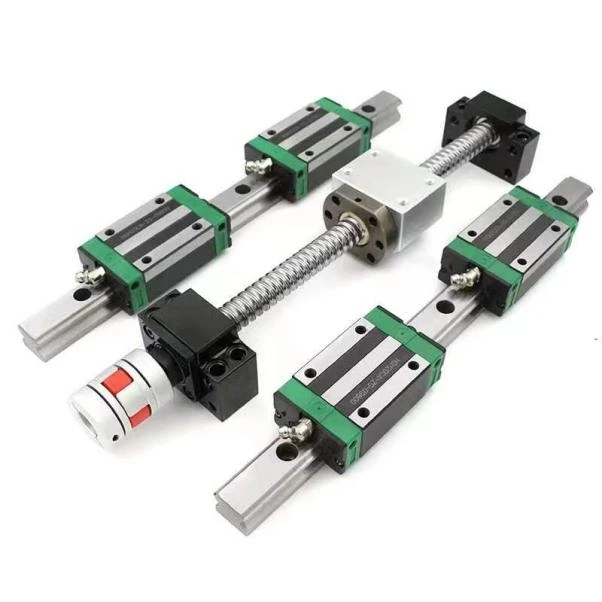
High speed and low friction: The roller is in contact with the steel axis, with a low friction coefficient and fast heat dissipation, suitable for high-speed reciprocating motion.
Dust and dirt prevention: Sealed roller design (IP protection level), automatic scraping of debris, suitable for dusty environments (such as woodworking equipment).
Maintenance free: Card type oil tank lubrication, low wear rate of chrome plated steel shaft and roller, and extended service life by 3 times.
Lightweight: Aluminum alloy material is 30% -50% lighter than steel guide rails, suitable for weight sensitive equipment.
-
Product Application
Precision machining: laser cutting machines, engraving machines (relying on micrometer level positioning accuracy).
High speed production line: packaging machinery, printing equipment (speed requirement ≥ 5 meters/second).
Special environment: Medical equipment (silent), food production line (no lubricant contamination).
-
Product Detail
-
-
Product Parameters

-
Applications of SGB Linear Guides and Bearings in CNC Machines, Robotics, and Automation Systems
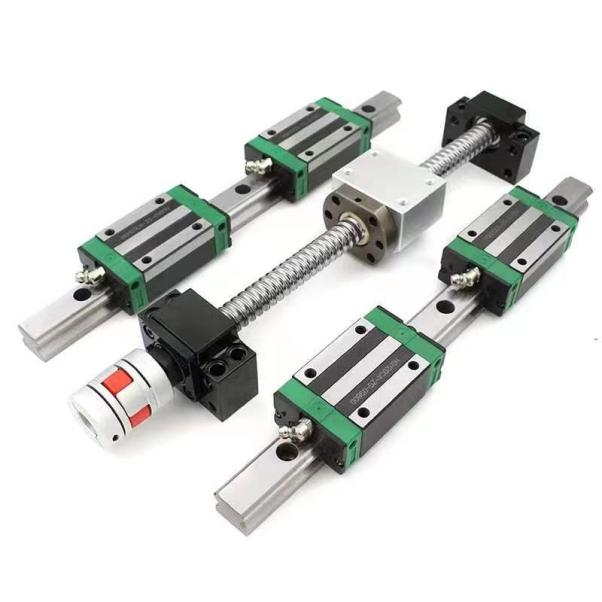
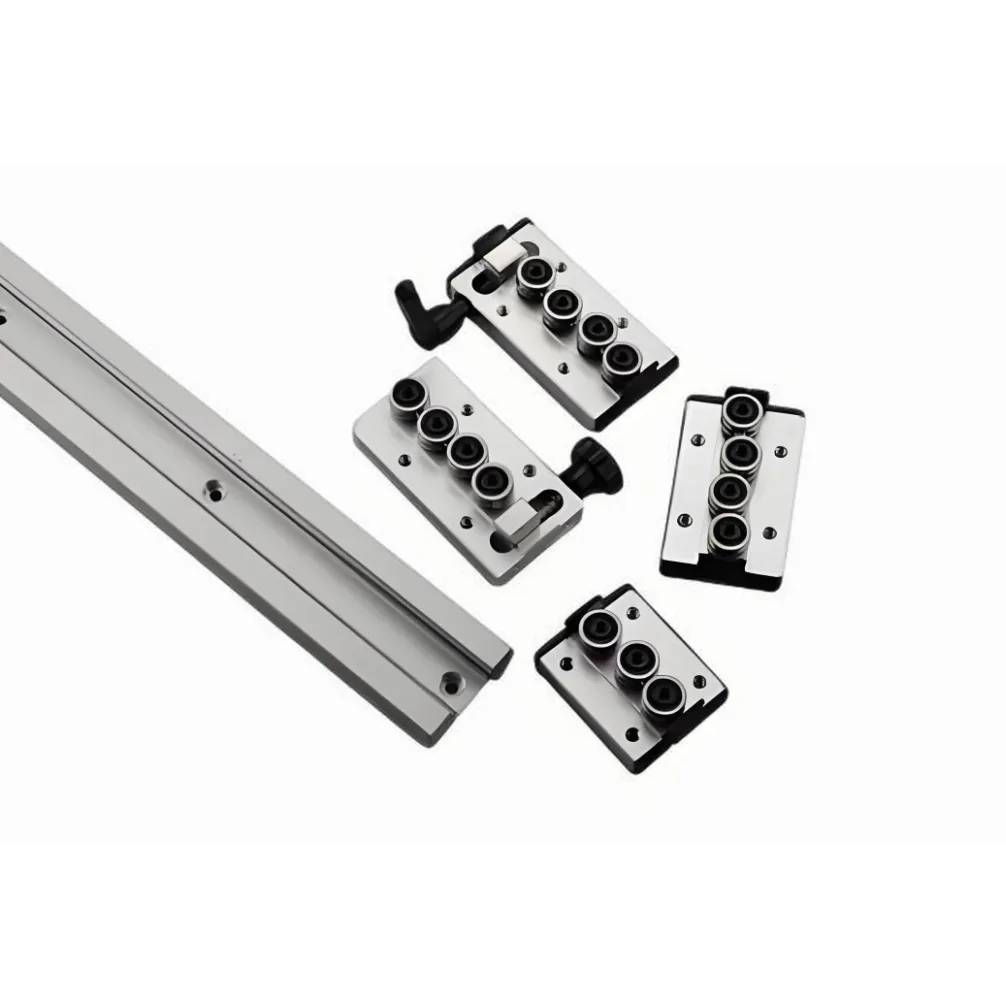
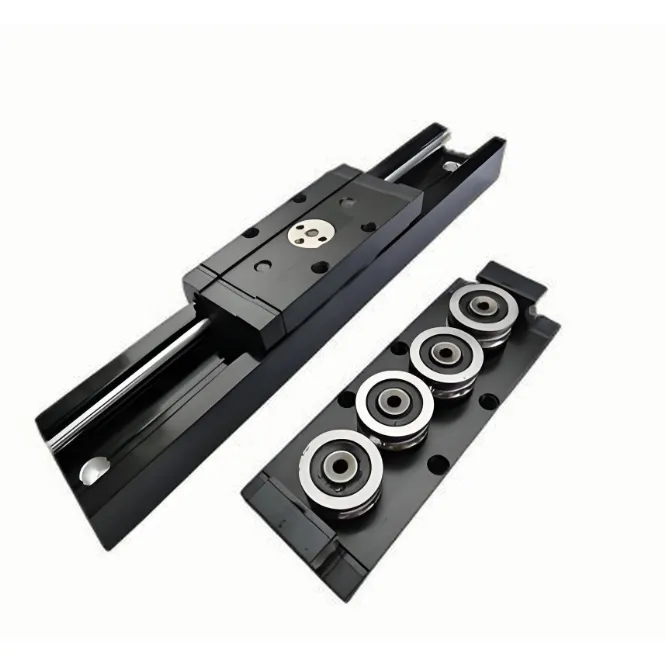
In modern industrial automation, precise linear motion is crucial for ensuring efficiency, accuracy, and reliability. SGB Linear Guides and Bearings, including models like SGB10-3UU, SGB20-4UU, and SGB25-5UU, provide robust solutions for dual-axis linear motion in CNC machines, robotic systems, and various automated production lines. These linear guide rail systems are engineered to deliver smooth, low-friction movement, enhanced load capacity, and long-term durability, making them essential components in high-precision applications.
1. Overview of SGB Linear Guide Systems
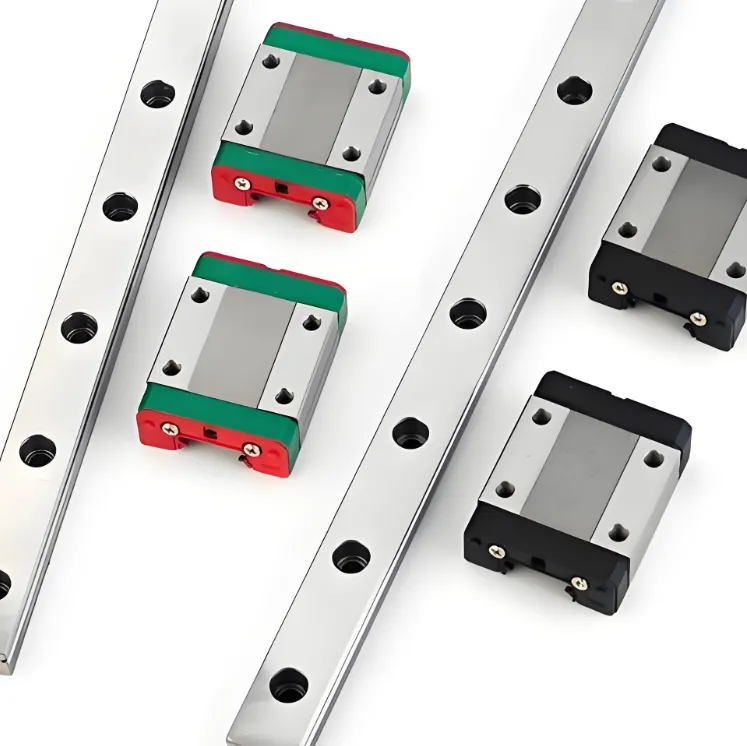
Dual-axis linear guide rails are designed to allow motion along two perpendicular axes, enabling precise positioning and stable movement in complex machinery. The SGB series combines high-quality rails with recirculating ball bearings to ensure smooth motion with minimal backlash. The SGB10-3UU is ideal for compact machines requiring light to medium load support, the SGB20-4UU suits medium-duty industrial applications, and the SGB25-5UU supports heavier loads for large CNC and robotic systems.
The SGB series is widely used because it can maintain precision over extended travel lengths while reducing vibration, improving overall machine performance.
2. Applications in CNC Machines
CNC machinery relies on precise linear motion to maintain accuracy and repeatability during cutting, milling, engraving, and drilling operations. SGB linear guides allow CNC machines to move tool heads smoothly along dual axes, providing consistent positioning even under high-speed conditions. The recirculating ball bearings within SGB rails reduce friction, resulting in lower energy consumption and less wear on moving components.
By selecting the appropriate SGB model, engineers can tailor the system for specific CNC machine requirements:
SGB10-3UU: Compact CNC routers and small engraving machines.
SGB20-4UU: Medium-duty CNC milling machines and laser cutters.
SGB25-5UU: Large gantry-style CNC machines with heavier tool heads and larger workpieces.
This flexibility allows manufacturers to achieve higher production quality while maintaining long-term operational reliability.
3. Applications in Robotics
Robotic systems often require dual-axis motion for pick-and-place, assembly, and material handling tasks. SGB linear guides and bearings offer:
Smooth, repeatable motion to ensure accurate placement.
High load capacity to support robotic arms with varying payloads.
Stability during high-speed operation to reduce errors and improve cycle time.
Smaller robotic systems can leverage SGB10-3UU for lightweight arms, while industrial robots benefit from SGB25-5UU, which supports heavier loads and larger travel distances. These linear guide systems simplify robotic kinematics by reducing the need for complex rotary joints, enabling efficient and compact machine layouts.
4. Applications in Automation Systems
Beyond CNC and robotics, SGB dual-axis linear guide rails are used extensively in automated production lines for packaging, inspection, and material handling. Smooth linear motion ensures consistent operation, reduces downtime caused by maintenance, and minimizes errors in repetitive tasks. Dual-axis SGB rails allow multiple components to move simultaneously, optimizing workflow and improving overall efficiency.
5. Advantages of SGB Linear Guides
SGB linear guides and bearings offer several key advantages:
High precision and low backlash for accurate motion.
Smooth, low-friction operation for reduced energy consumption.
Durable construction suitable for heavy-duty industrial use.
Flexible installation options for compact or large machines.
These benefits make SGB guides ideal for applications demanding both high-speed operation and precise positioning.
6. Maintenance and Reliability
SGB linear guides are designed for long-term reliability. The rails are precision-ground and hardened to resist wear, while sealed recirculating ball bearings prevent contamination and maintain smooth motion. Routine lubrication and inspection keep the system performing optimally, ensuring minimal downtime in CNC, robotic, and automated production environments.
Conclusion
SGB Linear Guides and Bearings, including SGB10-3UU, SGB20-4UU, and SGB25-5UU, provide reliable dual-axis linear motion solutions for CNC machines, robotic systems, and automation lines. Their precision, durability, and smooth motion enhance performance, reduce maintenance, and improve overall production efficiency. Implementing SGB dual-axis guide rail systems allows manufacturers to achieve high-accuracy, high-speed operation across a wide range of industrial applications.
-
Choosing the Right Dual Axis Linear Guide Rail System: Comparing SGB10-3UU, SGB20-4UU & SGB25-5UU
Selecting the right dual-axis linear guide rail system is critical for achieving precision, stability, and efficiency in CNC machines, robotic systems, and automated production lines. SGB Linear Guide Rails and Bearings provide versatile solutions across various load capacities and application requirements. Understanding the differences between SGB10-3UU, SGB20-4UU, and SGB25-5UU ensures optimal performance, longevity, and cost-efficiency for industrial machinery.
1. Overview of SGB Dual-Axis Guide Rails
SGB dual-axis linear guide rails combine precision-ground aluminium or steel rails with recirculating ball bearings to enable smooth, low-friction motion along two perpendicular axes. The design minimizes backlash, vibration, and wear, which is essential for high-precision CNC and robotic applications. Dual-axis motion simplifies complex machine kinematics by providing coordinated movement along X and Y axes without requiring additional rotary joints.
The SGB series includes:
SGB10-3UU: Compact, lightweight dual-axis guide suitable for small machines and low to medium loads.
SGB20-4UU: Medium-duty guide with higher load capacity and greater travel range, ideal for mid-sized industrial machines.
SGB25-5UU: Heavy-duty guide supporting large CNC gantries, industrial robots, and high-load automation systems.
2. Comparing Load Capacity and Travel Length
Load capacity and travel length are primary considerations when choosing a linear guide system.
SGB10-3UU: Supports lighter loads (up to several kilograms), typically used in small CNC routers, desktop 3D printers, and compact robotic arms. Travel lengths of 1000mm are common.
SGB20-4UU: Handles moderate loads and is suitable for medium-scale CNC machines, laser cutters, and robotic assemblies. Travel lengths up to 2000mm are supported.
SGB25-5UU: Designed for heavy loads and long travel, ideal for industrial automation, gantry-style CNC machines, and high-capacity robotic systems.
Selecting the correct model ensures that the machine operates within its mechanical limits, maintaining precision and prolonging the lifespan of the components.
3. Precision and Accuracy
All SGB dual-axis guides maintain high accuracy through:
Precision-ground rails: Ensuring smooth, straight motion with minimal deviation.
Recirculating ball bearings: Providing low-friction motion and repeatable positioning.
Dual-axis design: Coordinating X and Y movements to simplify motion control in CNC and robotic applications.
The correct model selection ensures that high-precision operations, such as cutting, engraving, and pick-and-place tasks, can be performed reliably.
4. Applications in CNC Machines
Choosing the right SGB model depends on the machine size and tool requirements:
SGB10-3UU: Small CNC routers and desktop milling machines.
SGB20-4UU: Mid-sized CNC machines, medium-duty gantries, and laser engraving systems.
SGB25-5UU: Large-scale CNC milling, industrial laser cutters, and heavy-duty gantry machines.
Proper sizing ensures smooth operation, high repeatability, and extended tool life.
5. Applications in Robotics and Automation
In robotics, SGB dual-axis guides allow precise motion along two axes, enabling high-speed pick-and-place, assembly, and material handling operations. Smaller robots benefit from SGB10-3UU, while industrial-grade robots require SGB25-5UU for heavy payloads and extended travel. Automation systems, such as packaging and inspection lines, also benefit from these guides for synchronized motion, reducing cycle times and increasing productivity.
6. Installation and Maintenance
SGB linear guides are easy to install with flanged or standard mounting options. Bearings are pre-lubricated and sealed to reduce contamination, while periodic maintenance ensures smooth motion. Choosing the correct model based on load, travel, and application reduces wear and minimizes downtime.
7. Advantages of SGB Dual-Axis Guide Rails
Key advantages include:
High precision and low backlash.
Smooth, low-friction motion for energy efficiency.
Flexible load capacity and travel options.
Durable construction for long-term industrial use.
These features make SGB guides adaptable for a wide range of CNC, robotic, and automation applications.
Conclusion
Selecting the right dual-axis SGB Linear Guide Rail System—whether SGB10-3UU, SGB20-4UU, or SGB25-5UU—is critical for achieving precision, efficiency, and durability in CNC, robotics, and automation systems. By understanding the load capacity, travel length, and application requirements, engineers can ensure optimal performance, reduce maintenance, and maximize productivity in modern industrial environments.
-
What is the average lead time?
Request a Quote
If you are interested in our products, you can choose to leave your information here, and we will be in touch with you shortly.