In modern precision motion systems, engineers often need more than simple linear guidance. Many applications require a component that can transmit torque while allowing smooth linear motion, and in more advanced cases, even combine linear movement with controlled rotation. This is where ball splines and rotary ball splines play a critical role.
Widely used in CNC machines, industrial automation, robotics, and semiconductor equipment, ball splines help designers achieve high accuracy, rigidity, and long service life in compact mechanical systems. This article explains what ball splines and rotary ball splines are, how they work, and how to choose the right solution for your application.
What Is a Ball Spline?
A ball spline is a precision linear motion component designed to allow axial movement while preventing relative rotation between the shaft and the nut. It consists of a ball spline shaft, a ball spline nut or ball spline bearing, and multiple rows of hardened steel balls.
The spline shaft features longitudinal grooves, and the balls roll between the shaft grooves and the nut raceways. This rolling contact replaces sliding friction, resulting in high efficiency, low wear, and excellent positioning accuracy.
Unlike traditional keyways or square shafts, a ball spline can transmit significant torque while still moving smoothly in the linear direction. This makes it ideal for applications where rotational displacement must be strictly controlled.
How Does a Ball Spline Work?
The working principle of a ball spline is based on ball circulation technology. As the shaft moves axially, the balls roll along the spline grooves and recirculate inside the nut through internal return paths.
Because the balls engage directly with the spline grooves, torque is transmitted efficiently while rotation is restrained. At the same time, rolling contact minimizes friction and heat generation, allowing for higher speeds and longer service life.
Ball splines are capable of handling:
Axial loads
Radial loads
Torsional loads
This multi-load capability makes them suitable for demanding industrial environments.
Typical Applications of Ball Splines
Ball splines are widely used in machinery that requires precise linear motion combined with anti-rotation performance, including:
CNC machining centers
Industrial automation equipment
Robotic arms and positioning systems
Packaging and assembly machines
Semiconductor manufacturing equipment
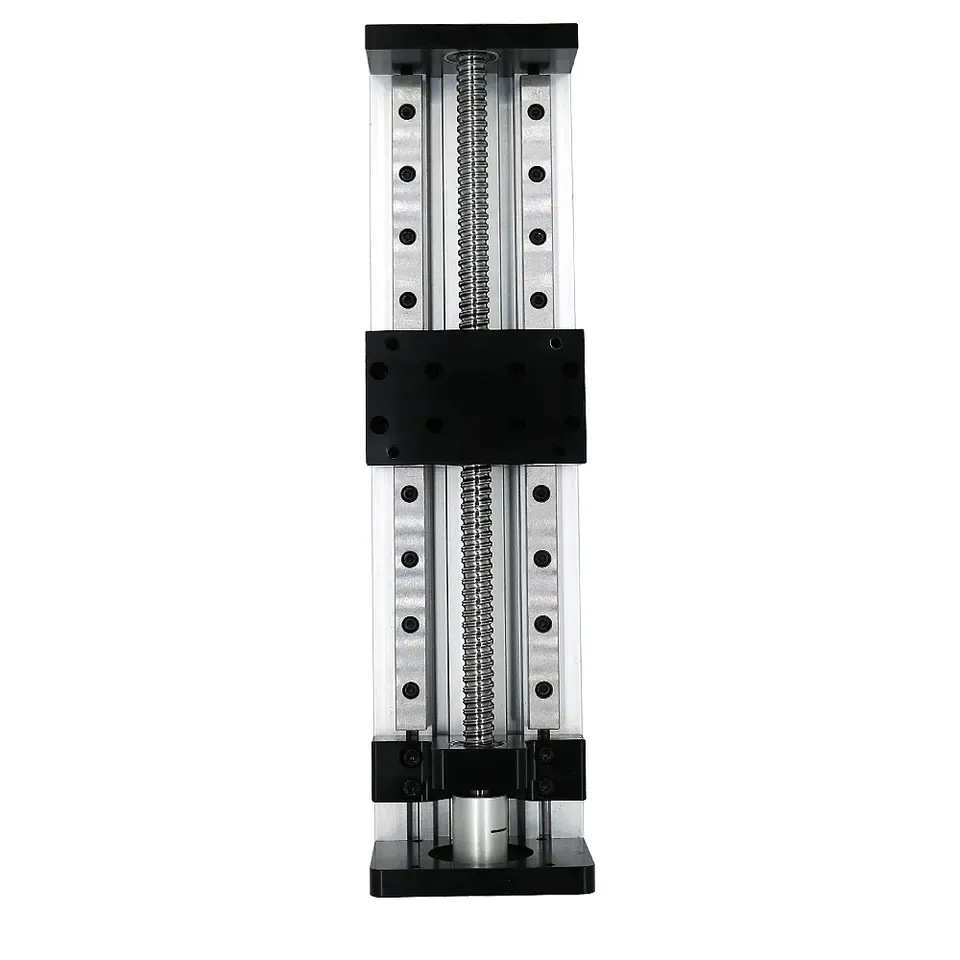
In many systems, ball spline shafts are used together with linear guides or ball screws to form stable, high-precision motion modules.
What Is a Rotary Ball Spline?
A rotary ball spline is an advanced version of the standard ball spline. While a conventional ball spline prevents rotation, a rotary ball spline is designed to allow both linear movement and rotational motion between the shaft and the nut.
In other words, a rotary ball spline combines the functions of a ball spline and a rotary bearing into a single component. It can support linear travel, controlled rotation, and torque transmission at the same time.
This multifunctional capability makes rotary ball splines especially valuable in compact, multi-axis systems where space and mechanical simplicity are critical.
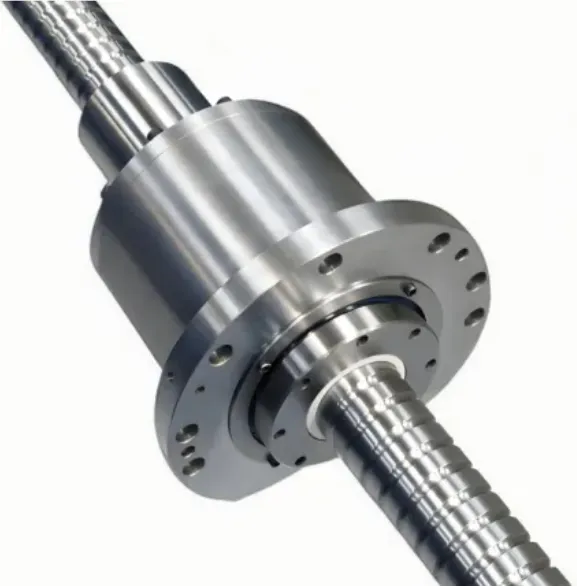
How Does a Rotary Ball Spline Work?
A rotary ball spline uses specially designed spline grooves and ball circulation paths that support rotational movement without sacrificing rigidity or accuracy. The balls roll along optimized raceways that accommodate both axial displacement and rotation.
Many rotary ball spline designs integrate angular contact structures, enabling them to handle complex load combinations such as axial loads, radial loads, and moment loads. This allows the shaft to rotate smoothly while maintaining precise alignment under operating forces.
Due to their higher structural complexity and precision requirements, rotary ball splines are typically used in high-end automation and motion control systems.
Common Applications of Rotary Ball Splines
Rotary ball splines are often found in advanced industrial and technical applications, such as:
Multi-axis CNC systems
Robotic end-effectors
Automatic tool changers
Medical and laboratory equipment
Semiconductor handling and inspection systems
By combining linear and rotational motion in one unit, rotary ball splines help reduce component count, simplify system design, and improve overall reliability.
Ball Spline vs Rotary Ball Spline: Key Differences
Although they belong to the same product family, ball splines and rotary ball splines serve different purposes:
Motion capability:
Ball splines allow linear motion only, while rotary ball splines allow both linear and rotational motion.
Design complexity:
Rotary ball splines have more complex internal structures and higher manufacturing precision requirements.
Application focus:
Ball splines are best for anti-rotation needs, whereas rotary ball splines are ideal for systems requiring synchronized or independent rotation.
Understanding these differences helps engineers select the most suitable solution based on performance and cost considerations.
How to Choose the Right Ball Spline Solution
When choosing between a ball spline and a rotary ball spline, engineers should consider:
-
Whether rotation is required
-
Torque and load requirements
-
Accuracy and repeatability needs
-
Available installation space
-
Operating speed and duty cycle
For standard linear systems with torque transmission requirements, a ball spline shaft with a matching ball spline bearing is usually sufficient. For complex motion paths or integrated multi-axis movement, a rotary ball spline offers superior flexibility.
Conclusion
Ball splines and rotary ball splines are essential components in modern precision motion engineering. By enabling smooth linear movement with reliable torque transmission—and in the case of rotary ball splines, controlled rotation—they allow designers to build compact, efficient, and highly accurate mechanical systems.
As automation, robotics, and high-precision manufacturing continue to advance, the importance of well-designed ball spline solutions will only grow. Selecting the right type at the design stage ensures better performance, longer service life, and reduced system complexity.
Author
Daniel Wright
Senior Motion Control Engineer
Author Bio
Daniel Wright is a senior motion control engineer with over 12 years of experience in linear motion systems and industrial automation. He specializes in ball splines, rotary ball splines, ball screws, and linear guides, and has worked closely with OEM manufacturers and automation integrators worldwide. Daniel regularly writes technical articles focused on practical engineering solutions and SEO-driven industrial content.