Precision Linear Motion: Understanding gear and rack Systems
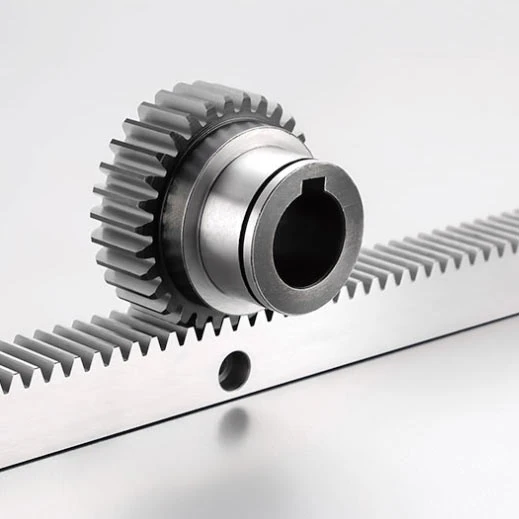
In high-precision industrial applications, the synergy between a pinion and a linear rack is paramount for converting rotary motion into precise linear movement. This article delves into the intricate world of gear and rack systems, exploring their fundamental role, advanced manufacturing processes, diverse application scenarios, and critical performance attributes. Specifically, we will highlight the capabilities of advanced solutions like the Rocket Pinion Gear And Rack, designed to meet the rigorous demands of modern industrial automation.
A robust gear and rack system, often synonymous with rack and pinion mechanisms, offers exceptional rigidity, accuracy, and load-bearing capacity, making it indispensable across various sectors from heavy industry to sophisticated robotics. Understanding the technical nuances, from material selection to quality assurance, is crucial for engineers and procurement specialists aiming to optimize system performance and longevity.
Industry Trends Shaping Modern Gear and Rack Solutions
The landscape of linear motion technology is continually evolving, driven by demands for higher precision, increased speed, enhanced durability, and greater energy efficiency. Key trends influencing the development and adoption of advanced gear and rack systems include:
- Precision Engineering: A shift towards ultra-high-precision manufacturing processes, allowing for tighter tolerances and smoother operation, critical for applications like CNC machine tools and semiconductor manufacturing.
- Material Innovation: Development of advanced materials such as high-strength alloy steels, hardened and ground stainless steels, and specialized coatings (e.g., nitriding, black oxide) to improve wear resistance, corrosion protection, and load capacity.
- Modularity and Customization: Growing demand for modular rack and pinion gear systems that can be easily integrated into diverse machine designs, coupled with bespoke solutions tailored to specific operating environments and performance requirements.
- Sustainability and Efficiency: Focus on designs that minimize friction, reduce energy consumption, and offer longer service life, thereby lowering total cost of ownership (TCO) and environmental impact.
- Digital Integration: Incorporation of smart sensors and IoT capabilities for real-time monitoring of system performance, predictive maintenance, and enhanced operational intelligence.
These trends underscore the importance of selecting a reliable gear rack suppliers who can deliver cutting-edge solutions that meet these evolving industrial benchmarks.
Technical Specifications of Rocket Pinion Gear And Rack
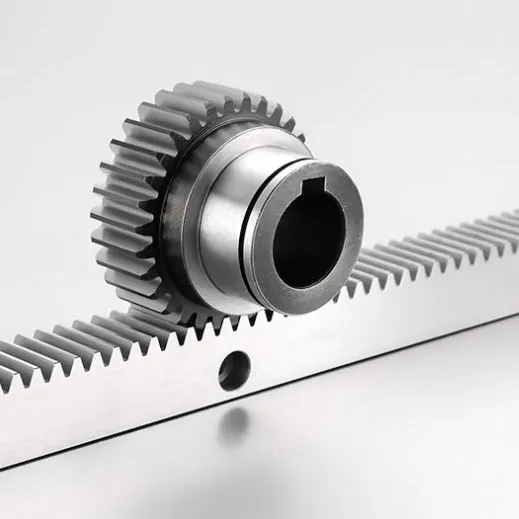
Understanding the detailed technical specifications is paramount when evaluating rack and pinion systems for critical applications. The Rocket Pinion Gear And Rack, for instance, is engineered for superior performance, offering a balance of strength, precision, and durability. Key parameters include:
| Parameter | Specification | Benefit |
|---|---|---|
| Material (Rack) | C45 Carbon Steel (optional 42CrMo4 alloy steel) | High tensile strength, good machinability, improved wear resistance with treatment. |
| Material (Pinion) | 20CrMnTi Alloy Steel | Exceptional hardenability and toughness for demanding torque applications. |
| Module Range | M1 to M10 (Customizable) | Versatility for various load capacities and precision requirements. |
| Precision Grade | DIN 5 to DIN 9 (ISO equivalent) | Ensures high positional accuracy and smooth operation, critical for CNC. |
| Hardness (Rack) | HRC 48-55 (After induction hardening) | Superior wear resistance and extended service life. |
| Hardness (Pinion) | HRC 58-62 (After carburizing and quenching) | Maximum surface hardness for fatigue and wear resistance. |
| Max Length (Rack) | 2000mm (Extendable via butt joints) | Facilitates long travel applications with minimal accumulated error. |
| Tooth Profile | Straight or Helical (Right/Left Hand) | Helical teeth offer smoother operation, lower noise, and higher load capacity. |
These specifications highlight the engineering depth required to produce reliable and high-performance gear and rack systems, crucial for industries demanding unwavering accuracy and endurance.
The Advanced Manufacturing Process of Gear And Rack Systems
The production of high-quality gear and rack components is a multi-stage process involving meticulous engineering, advanced machinery, and stringent quality control. Here’s a detailed overview:
- Material Selection and Preparation:
The process begins with selecting high-grade raw materials, typically C45 carbon steel or alloy steels like 42CrMo4 and 20CrMnTi, based on the required load, wear resistance, and corrosion properties. Forgings or high-quality rolled stock are precision cut to approximate dimensions, ensuring material integrity and minimal internal defects. Initial material testing (e.g., spectral analysis, ultrasonic inspection) is often conducted to confirm compliance with ASTM or EN standards.
- Initial Machining (Roughing):
The raw material undergoes rough machining using CNC lathes and milling machines to bring the components close to their final shape. This stage removes excess material efficiently, preparing the workpiece for subsequent precision operations. For racks, this includes squaring and preliminary slotting.
- Tooth Cutting (Hobbing/Milling):
For pinions, hobbing is a common method for creating helical or spur teeth, offering high productivity and accuracy. For racks, specialized rack milling machines (rack shapers) or CNC milling centers with dedicated attachments are used. This stage is critical for establishing the correct tooth profile, pitch, and pressure angle according to DIN (Deutsches Institut für Normung) or ISO (International Organization for Standardization) standards. Precision in this step directly impacts the meshing efficiency and smooth operation of the rack and pinion gear.
- Heat Treatment:
To achieve desired hardness and strength, components undergo various heat treatments. Pinions often undergo carburizing and quenching to achieve a case hardness of HRC 58-62, providing excellent wear resistance while maintaining a tough core. Racks typically receive induction hardening (HRC 48-55) on the tooth flanks, followed by tempering to relieve stress. These processes significantly enhance the service life and load-bearing capacity of the gear and rack system.
- Grinding and Finishing:
After heat treatment, precision grinding is performed on the tooth flanks and critical mounting surfaces. This step is crucial for achieving high accuracy (e.g., DIN 5-7), reducing backlash, and improving surface finish. Profile grinding machines with advanced controls ensure optimal tooth geometry and surface integrity. Superfinishing techniques might be employed for extremely demanding applications to further reduce friction and noise.
- Quality Control and Testing:
Every component undergoes rigorous inspection. This includes dimensional checks using CMM (Coordinate Measuring Machines), gear rolling tests to verify pitch accuracy and runout, hardness testing, surface roughness measurements, and magnetic particle inspection for sub-surface defects. Adherence to international testing standards like ISO 1328 for gear accuracy and ANSI/AGMA (American Gear Manufacturers Association) standards is non-negotiable, ensuring product reliability and performance consistency.
- Surface Treatment and Packaging:
Finally, components may receive protective coatings (e.g., black oxide for corrosion resistance, special lubricants) before being precisely packed to prevent damage during transit. Proper packaging is essential, especially for sensitive precision parts destined for global distribution.
This meticulous manufacturing regimen is why reliable gear rack suppliers are able to promise extended service life, often exceeding 10-15 years under typical operating conditions, depending on lubrication and load cycles. Target industries such as petrochemical, metallurgy, and water supply & drainage greatly benefit from this level of precision and durability, where system uptime and safety are paramount.
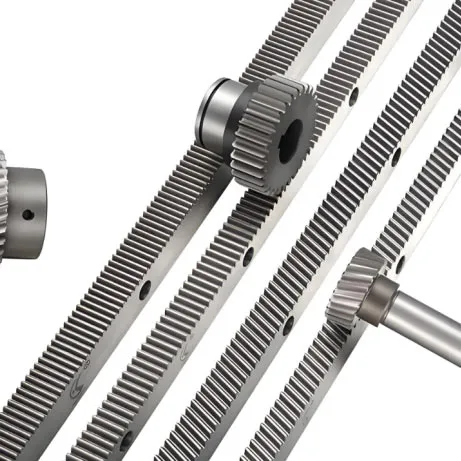
Diverse Application Scenarios and Technical Advantages
The versatility of gear and rack systems makes them a cornerstone in a multitude of industrial applications, particularly where precise, robust linear motion is required. Their technical advantages translate into tangible benefits across diverse sectors.
Typical Application Scenarios:
- CNC Machine Tools: Providing the X, Y, and Z axis movements for milling, turning, and grinding machines, demanding ultra-high precision and rigidity.
- Robotics and Automation: Enabling linear movement in robotic arms, gantry systems, and automated material handling equipment, where dynamic performance and repeatability are key.
- Material Handling: Used in large conveyors, automated storage and retrieval systems (AS/RS), and transfer lines, requiring high load capacity and long travel distances.
- Heavy Industrial Machinery: Applications in steel mills, foundries, and heavy presses for precise positioning and robust force transmission.
- Aerospace and Defense: Actuation systems for flight simulators, antenna positioning, and specialized manufacturing equipment.
- Petrochemical Industry: Actuation of large valves and gates, requiring corrosion resistance and reliability in harsh environments.
- Water Supply & Drainage: Operating sluice gates and flow control mechanisms in water treatment plants and flood control systems, often needing specific coatings for corrosion protection.
- Printing and Packaging: Precise positioning of print heads and cutting mechanisms, ensuring high throughput and accuracy.
Technical Advantages:
- High Load Capacity: Robust design and advanced materials allow rack and pinion gear systems to handle significant axial and radial loads, far exceeding many belt or lead screw systems.
- Exceptional Precision and Repeatability: With ground tooth flanks and tight manufacturing tolerances (e.g., DIN 5), these systems offer excellent positional accuracy and repeatability, crucial for precision machinery.
- Infinite Travel Length: Racks can be butt-jointed, allowing for theoretically unlimited travel lengths, making them ideal for very long axes (e.g., gantry robots, automated warehouses).
- High Speed Capability: Unlike ball screws, gear and rack systems are not limited by critical speed and can operate at very high linear velocities with appropriate lubrication and motor sizing.
- High Rigidity and Stiffness: The direct meshing of teeth provides high torsional and bending stiffness, leading to minimal deflection under load and improved dynamic performance.
- Energy Saving: Modern designs, especially with helical gearing and optimized tooth profiles, reduce friction and improve transmission efficiency, contributing to energy savings.
- Corrosion Resistance: For specific environments, stainless steel or specialized coatings (e.g., nickel plating, galvanization) can be applied to provide superior corrosion resistance, crucial for marine or chemical processing applications.
- Low Maintenance Requirements: With proper installation and lubrication, these systems are known for their long service life and minimal maintenance, reducing downtime and operational costs.
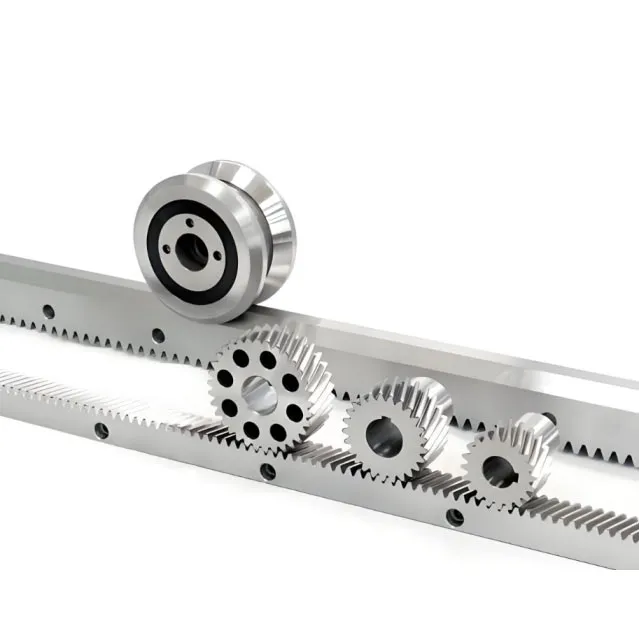
Vendor Comparison: Choosing the Right Gear Rack Suppliers
When looking to buy rack and pinion systems, selecting the right supplier is critical. The market offers a range of options, from mass-produced standard components to highly customized, precision-engineered solutions. Evaluating suppliers based on key factors can significantly impact the long-term performance and cost-effectiveness of your industrial machinery.
| Feature/Category | Standard Precision (e.g., DIN 9-10) | High Precision (e.g., DIN 7-8) | Ultra-High Precision (e.g., DIN 5-6) |
|---|---|---|---|
| Manufacturing Method | Milled, often unhardened or case hardened | Milled, induction hardened, some ground surfaces | Precision ground after heat treatment (e.g., carburized & ground) |
| Positional Accuracy per Meter | ±0.08 mm to ±0.15 mm | ±0.02 mm to ±0.05 mm | ±0.008 mm to ±0.015 mm |
| Backlash Achievable | Typically > 0.05 mm | 0.02 mm to 0.05 mm | < 0.015 mm (or zero backlash with special pinions) |
| Typical Applications | General automation, material handling, packaging | Mid-range CNC, robotic gantry, laser cutting | High-end CNC, machine tools, semiconductor, aerospace |
| Cost Range | Low to Moderate | Moderate to High | Premium |
When evaluating gear rack suppliers, consider their manufacturing capabilities, quality certifications (e.g., ISO 9001, AS9100), engineering support, and ability to provide customized solutions. A reputable supplier will offer detailed technical data, provide test reports, and have a proven track record of successful installations. For instance, suppliers of the Rocket Pinion Gear And Rack prioritize adherence to ISO and ANSI standards, ensuring consistency and reliability across their product lines.
Customized Solutions for Specialized Gear And Rack Requirements
While standard rack and pinion gear systems serve a wide array of applications, many industrial environments present unique challenges that necessitate customized solutions. Leading gear rack suppliers offer comprehensive customization services to meet specific demands for material, geometry, surface treatment, and integration.
- Material Customization: Beyond standard carbon and alloy steels, options include stainless steel for marine or chemical environments, bronze for self-lubricating properties, or engineered plastics for lightweight, low-noise applications.
- Geometry Modifications: This can involve custom modules, pressure angles, tooth profiles (e.g., crowned teeth for misalignment tolerance), specific helical angles, and unique mounting hole patterns. Tailored lengths and segmenting for complex layouts are also common.
- Surface Treatments and Coatings: Enhanced protection against corrosion, wear, or friction can be achieved through treatments like phosphating, nitriding, nickel plating, or specialized ceramic coatings. These are crucial for extending service life in aggressive operating conditions.
- Integrated Features: Customization may extend to integrating features such as sensor mounting points, specific lubrication channels, or pre-drilled and tapped holes for easy assembly with other machine components.
- Backlash Optimization: For ultra-precision applications, suppliers can offer matched rack and pinion sets that are ground together, or use anti-backlash pinion designs (e.g., split pinions with spring preloading) to virtually eliminate backlash.
Engaging with a supplier capable of detailed engineering analysis and prototyping ensures that the customized gear and rack solution perfectly aligns with application requirements, delivering optimal performance and longevity.
Real-World Application Case Studies for Gear And Rack Systems
The theoretical advantages of gear and rack systems are best illustrated through their successful deployment in challenging industrial environments. Here are a few representative case studies:
Case Study 1: Large-Scale Gantry Robot for Automotive Assembly
A major automotive manufacturer required a robust and highly precise linear motion system for a new gantry robot responsible for welding large vehicle frames. Traditional belt drives lacked the rigidity and load capacity, while ball screws were limited by travel length and critical speed. A high-precision, ground helical rack and pinion system (DIN 6) with dual pinions for stiffness and backlash control was implemented. The system provided exceptional positional accuracy (±0.015 mm over 10 meters), high acceleration/deceleration capabilities, and maintained high stiffness under dynamic loads, significantly reducing cycle times and improving weld quality. The extended service life of the hardened and ground components minimized maintenance downtime.
Case Study 2: Precision CNC Plasma Cutting Machine
A manufacturer of heavy metal fabrication equipment sought to upgrade their CNC plasma cutting machines to achieve higher cutting speeds and greater contour accuracy. The existing milled gear and rack system exhibited noticeable backlash and vibration at higher speeds. By upgrading to a carburized and ground straight rack and pinion gear with a precision planetary gearbox, the machine’s dynamic performance dramatically improved. The reduced backlash (< 0.01 mm) and increased rigidity allowed for faster traverse rates and tighter cornering, resulting in smoother cuts, reduced material waste, and a 20% increase in production throughput.
Case Study 3: Water Treatment Plant Sluice Gate Actuator
In a large municipal water treatment facility, the critical sluice gates required reliable, corrosion-resistant actuators. The environment was constantly humid and exposed to treated water, demanding materials and coatings that could withstand long-term exposure. A customized stainless steel gear and rack system with specialized epoxy coating on the rack and nickel-plated pinion was engineered. This solution offered superior corrosion resistance, ensuring consistent and precise operation of the heavy gates over two decades with minimal degradation, crucial for effective water flow management and flood control. The robust design meant minimal field maintenance and high operational uptime.
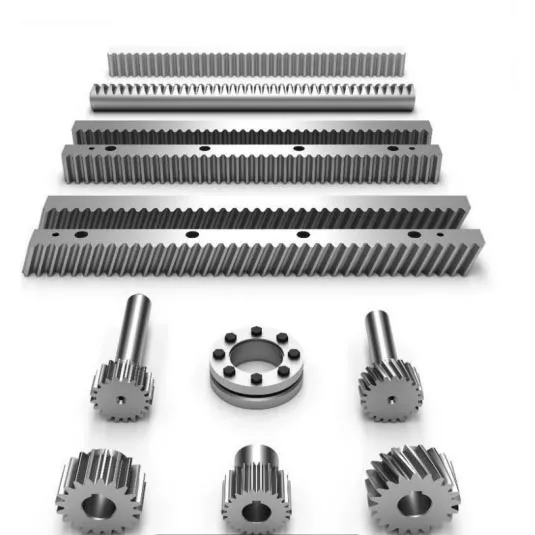
Ensuring Trust and Reliability: FAQ, Lead Time, Warranty & Support
Establishing trustworthiness and authority is paramount in B2B transactions. Reputable gear rack suppliers provide clear information on product support and company commitments.
Frequently Asked Questions (FAQ):
A: Straight rack and pinion systems are generally more economical and easier to manufacture, suitable for applications where noise and smoothness are less critical. Helical rack and pinion gear offers smoother, quieter operation, higher load capacity, and reduced backlash due to the larger contact ratio of the angled teeth. However, helical systems introduce axial thrust, which must be managed by the bearing system.
A: The module (m) defines the size of the gear teeth. Selection depends primarily on the required load capacity, desired precision, and available space. A larger module generally indicates stronger teeth and higher load capacity but also larger dimensions. It's crucial to perform load calculations, considering peak forces, acceleration, and desired service life, often with the assistance of engineering software or supplier consultation.
A: The primary maintenance requirement for gear and rack systems is proper lubrication. This prevents wear, reduces friction, and dissipates heat. The type and frequency of lubrication depend on the application, operating environment, and manufacturer's recommendations. Regular inspection for wear, proper alignment, and secure mounting is also vital to ensure optimal performance and prevent premature failure.
Lead Time and Fulfillment:
Standard gear and rack components typically have lead times ranging from 2-4 weeks, depending on stock availability and order volume. Customized solutions, due to specific material procurement, design, and manufacturing processes, can have lead times of 8-16 weeks. YDMotion, for example, maintains a robust inventory and efficient production lines to minimize lead times and offer reliable fulfillment globally.
Warranty Commitments:
Reputable suppliers typically offer a standard warranty of 12 to 24 months against manufacturing defects from the date of shipment. This commitment reflects confidence in their quality control processes and materials. Specific warranty terms will vary and should be confirmed prior to purchase, especially for high-value or customized orders.
Customer Support and After-Sales Service:
Comprehensive customer support is a hallmark of an authoritative supplier. This includes pre-sales technical consultation, assistance with product selection and sizing, post-sales installation guidance, and troubleshooting support. Many suppliers offer dedicated engineering teams to assist with complex integration challenges and provide ongoing technical assistance to maximize the operational efficiency of the gear and rack systems throughout their lifecycle.
Conclusion
The advanced gear and rack systems, exemplified by products like the Rocket Pinion Gear And Rack, represent critical components in modern industrial automation. Their ability to deliver high precision, immense load capacity, and extended service life makes them indispensable for a myriad of applications, from intricate CNC machining to heavy-duty material handling. By understanding the rigorous manufacturing processes, technical specifications, and benefits of customized solutions, engineers and B2B decision-makers can make informed choices to optimize their machinery's performance and ensure long-term operational excellence. Partnering with expert gear rack suppliers who adhere to stringent quality standards and offer comprehensive support is key to unlocking the full potential of these indispensable linear motion solutions.
References:
- ISO 1328-1:2013. Cylindrical gears — ISO system of accuracy — Part 1: Definitions and allowable values of deviations relevant to flanks of gear teeth. International Organization for Standardization.
- American Gear Manufacturers Association (AGMA) standards for gear accuracy and inspection.
- Machining and Metrology of Gear Racks. Manufacturing Engineering Society of South Africa.
- Dynamics of Rack and Pinion Systems in High-Speed Applications. Journal of Mechanical Engineering Science.
- Materials Science and Engineering: An Introduction, William D. Callister Jr., David G. Rethwisch.