Advancing Precision Linear Motion: The Role of Ball Spline Technology in Modern Industry
In the realm of advanced industrial automation, the demand for components that offer exceptional precision, rigidity, and smooth motion is ever-increasing. Among these critical elements, the ball spline stands out as a pivotal technology for transmitting torque while simultaneously allowing linear motion. This unique capability makes it indispensable in a wide array of high-performance applications where traditional keyways or splines fall short in terms of efficiency, wear resistance, and accuracy. The integration of rolling elements significantly reduces friction, leading to longer service life, reduced energy consumption, and superior positional accuracy.
Current industry trends highlight a sustained push towards miniaturization without compromising load capacity, higher operational speeds, and greater energy efficiency in automated systems. As such, the evolution of technologies like the ball spline, alongside related components such as the ball screw spline and ball screw, is paramount. Manufacturers are continually innovating to meet these rigorous demands, focusing on enhanced material properties, advanced manufacturing techniques, and integrated motion solutions. This article delves into the intricate world of ball spline technology, exploring its technical underpinnings, manufacturing processes, diverse applications, and strategic advantages for B2B stakeholders.
Technical Principles and Core Specifications of Ball Splines
A ball spline system fundamentally comprises a spline shaft with precision-ground raceway grooves and a spline nut equipped with recirculating ball elements. These balls circulate within the nut and engage with the raceway grooves on the shaft, facilitating smooth, low-friction linear motion while simultaneously transmitting rotational torque. This rolling contact mechanism drastically reduces friction compared to sliding contact, improving efficiency and prolonging operational life.
The core operating principles revolve around several critical parameters:
- Torque Capacity: The maximum rotational torque the spline can transmit without deformation or failure. Directly influenced by ball size, number of raceways, and material hardness.
- Rigidity: Resistance to deflection under load, crucial for maintaining positional accuracy in precision applications. Achieved through optimized contact angles and preloading.
- Accuracy: The precision of linear movement and rotational positioning, often specified in terms of lead accuracy or rotational backlash.
- Permissible Load: The maximum static and dynamic loads the system can endure, encompassing both axial and radial forces.
- Service Life: Measured in total travel distance or operating hours, determined by load conditions, speed, and lubrication.
- Operating Temperature Range: The environmental temperature limits within which the spline can function reliably.
Furthermore, understanding the distinction and benefits of a ball screw spline is vital. This integrated component combines the functions of a ball screw for precise linear motion and a ball spline for simultaneous torque transmission. This dual functionality is exceptionally beneficial in applications requiring synchronized linear and rotary movement from a single shaft, simplifying machine design and reducing component count.
Typical Ball Spline Product Specifications (Example)
| Parameter | Unit | Value Range (Typical) | Remarks |
|---|---|---|---|
| Shaft Diameter | mm | 8 - 100 | Standard sizes available |
| Dynamic Torque Rating (Ct) | N·m | 10 - 2000 | Per nominal diameter |
| Static Torque Rating (C0t) | N·m | 20 - 4000 | Max. momentary load |
| Accuracy Grade | - | P0, P1, P2 | P0: Highest precision |
| Max. Linear Speed | m/s | 0.5 - 5 | Dependent on load and lubrication |
| Operating Temperature | °C | -20 to +80 | Consult for higher temps |
| Life Expectancy | km | Up to 10,000 | Basic Dynamic Load Rating (C) basis |
The Rigorous Manufacturing Process of a Ball Spline
The production of a high-quality ball spline shaft and its corresponding nut involves a meticulously controlled, multi-stage manufacturing process to ensure the precision, durability, and performance required for demanding industrial applications. This intricate process combines advanced material science with state-of-the-art machining and stringent quality control.
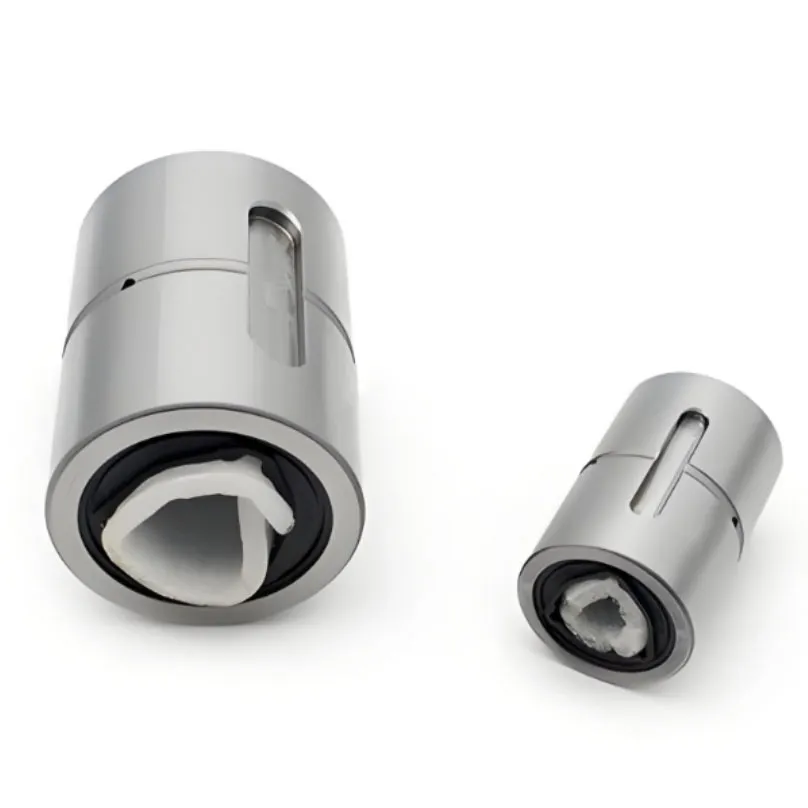
Detailed Process Flow:
- Material Selection: High-grade alloy steels, such as SCM415 (for case hardening) or SUJ2 (for through hardening), are chosen for their superior strength, wear resistance, and hardenability. These materials are critical for the longevity and load-bearing capacity of the ball spline.
- Shaft Blanks & Initial Machining: Raw steel bars are cut to length. Initial turning and milling operations shape the shaft blanks, preparing them for the precision spline groove creation. For larger components, some forging might be involved for grain refinement, but for precision shafts, it's primarily machining.
- Spline Groove Generation (CNC Machining): This is a critical step. High-precision CNC grinding machines are employed to create the intricate raceway grooves on the ball spline shaft. This process requires extremely tight tolerances to ensure smooth ball recirculation and high accuracy. The profile of these grooves is precisely engineered for optimal load distribution and reduced friction.
- Heat Treatment: The machined shafts and nuts undergo specialized heat treatment processes, such as induction hardening or carburizing, followed by quenching and tempering. This process significantly increases the surface hardness (e.g., HRC 58-62) while maintaining a tough core, enhancing wear resistance and overall durability.
- Precision Grinding & Lapping: Post-heat treatment, the raceway grooves and outer diameters are subjected to final precision grinding and, in some cases, lapping. This step achieves the specified dimensional accuracy, surface finish, and geometric tolerances (e.g., concentricity, straightness) vital for the spline's performance.
- Nut Production & Ball Recirculation System: Simultaneously, the spline nuts are manufactured with corresponding raceway geometries. The internal ball recirculation system, often involving return tubes or end caps, is meticulously designed and assembled to ensure continuous, smooth ball movement.
- Surface Treatment (Optional): Depending on application requirements, shafts and nuts may undergo additional surface treatments, such as black oxide coating for corrosion resistance, or specialized coatings for enhanced lubricity or reduced friction in specific environments. This is particularly relevant in industries like petrochemical or water treatment where components may face corrosive elements.
- Assembly & Preloading: The precision balls are assembled into the spline nut and shaft. Preloading, a process of applying an initial load to the balls, is often performed to eliminate backlash, increase rigidity, and enhance accuracy.
- Rigorous Quality Control & Testing: Each ball spline undergoes comprehensive testing against established standards such as ISO 9001, JIS (Japanese Industrial Standards), ANSI (American National Standards Institute), and DIN (Deutsches Institut für Normung). Tests include dimensional accuracy, concentricity, runout, torque transmission capacity, rigidity, and smooth motion verification. Life testing under simulated operating conditions ensures projected service life.
This meticulous process ensures that the finished ball spline delivers superior performance, extended service life, and reliable operation in even the most demanding environments, including applications requiring energy saving characteristics due to low friction or enhanced corrosion resistance with specific material and coating selections.
Technical Advantages and Performance Edge
The inherent design of the ball spline offers a multitude of technical advantages over conventional linear motion and torque transmission mechanisms. These benefits are directly responsible for its widespread adoption in high-performance machinery.
- High Torque Transmission Capacity: Due to the multiple points of contact provided by the recirculating balls, a ball spline can transmit significantly higher torque compared to traditional splines of similar dimensions. This allows for more compact designs and greater power density.
- Low Friction and Smooth Motion: The rolling contact mechanism of the balls virtually eliminates stick-slip phenomena, resulting in extremely low friction. This translates to remarkably smooth, quiet operation, reduced heat generation, and less power consumption, contributing to significant energy saving.
- High Rigidity and Accuracy: Preloading the balls within the nut and raceways effectively eliminates backlash, leading to very high rigidity and excellent positional accuracy. This is crucial for applications demanding precise movement and repeatability, such as in CNC machine tools and robotics.
- Long Service Life: The hardened steel construction and low-friction rolling contact minimize wear, drastically extending the operational service life of the ball spline. Proper lubrication further enhances this aspect, reducing maintenance requirements and total cost of ownership.
- Ease of Installation and Maintenance: Many ball spline designs offer modularity, allowing for relatively straightforward installation. The sealed or lubricated-for-life versions also simplify maintenance routines.
- Corrosion Resistance: While standard versions are not inherently corrosion-proof, manufacturers offer options with specialized coatings (e.g., chrome plating, black oxide) or stainless steel components that provide enhanced corrosion resistance, suitable for challenging environments like certain chemical processing or outdoor applications.
When compared to traditional keyway or involute splines, the superiority of the ball spline becomes evident. Traditional splines rely on sliding friction, leading to significant wear, backlash, and lower efficiency. The rolling contact of the ball spline mitigates these issues, offering a superior solution for demanding linear and rotary motion tasks.
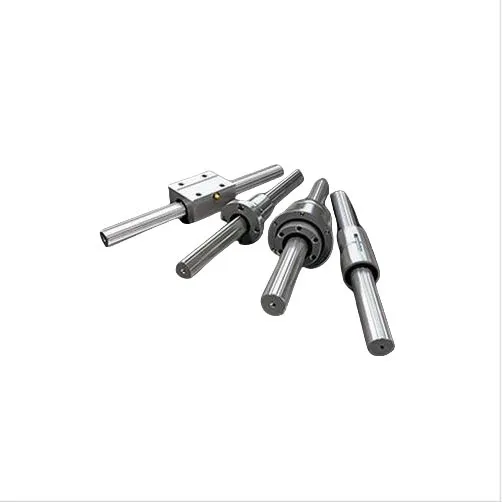
Diverse Application Scenarios and Target Industries
The versatility and high-performance characteristics of the ball spline make it an essential component across a broad spectrum of industries, particularly where precision linear and rotational motion is critical.
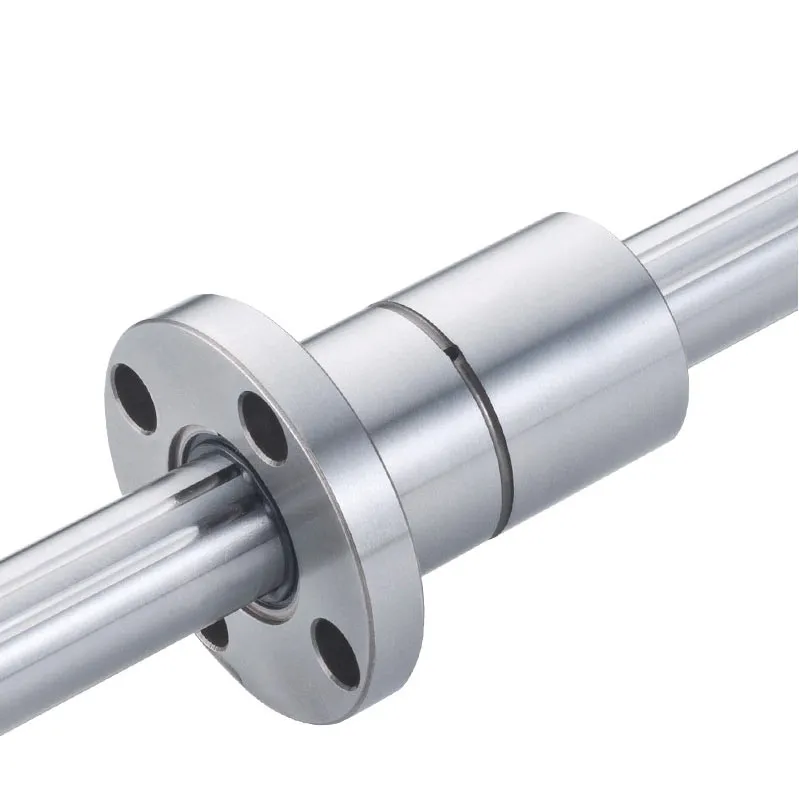
Key Target Industries:
- Industrial Automation & Robotics: Multi-axis robotic arms, pick-and-place systems, and automated assembly lines leverage ball spline technology for precise, high-speed, and reliable positioning and torque transmission.
- Semiconductor Manufacturing Equipment: Wafer handling robots, inspection stages, and processing equipment require ultra-high precision and smooth motion to prevent damage and ensure product quality.
- Machine Tools: CNC lathes, machining centers, and grinding machines utilize ball spline units for tool changers, workholding mechanisms, and precise axis movements where simultaneous rotation and linear adjustment are needed.
- Medical Devices: Precision diagnostic equipment, surgical robots, and laboratory automation systems benefit from the accuracy, low friction, and clean operation capabilities.
- Aerospace & Defense: Actuators, guidance systems, and testing equipment demand robust, reliable, and high-precision linear motion with torque transfer.
- Packaging and Printing Machinery: High-speed packaging lines, precise registration systems in printing presses, and material handling equipment rely on the speed and accuracy of ball splines for consistent throughput.
- Testing and Measurement Equipment: Calibration devices, optical inspection systems, and material testing machines require highly repeatable and accurate linear and rotary positioning.
Typical Application Scenarios:
In a typical scenario, a ball spline might be used in a Cartesian robot's Z-axis to lift and rotate a component. The linear movement (Z-axis) is handled by the spline's ability to move along its shaft, while the rotation (around the Z-axis) is provided by the spline nut's rotational capability, transmitting torque from a motor. This dual function streamlines design and enhances overall system performance, providing significant energy saving due to reduced friction and improved operational efficiency. For specialized environments like the petrochemical or metallurgy industries, customized ball spline units with enhanced corrosion resistance and robust sealing can be deployed in specific auxiliary equipment, such as valve actuators or material feed systems, where precise positioning and torque are critical, even if the primary motion is often linear. Similarly, in water supply & drainage systems, they might be found in automated gate or valve control mechanisms requiring high precision and reliability.
Vendor Comparison and Customized Ball Spline Solutions
Selecting the right ball spline manufacturer is a strategic decision for any B2B enterprise. Factors beyond just product specifications, such as a vendor's R&D capabilities, quality assurance, and after-sales support, are paramount.
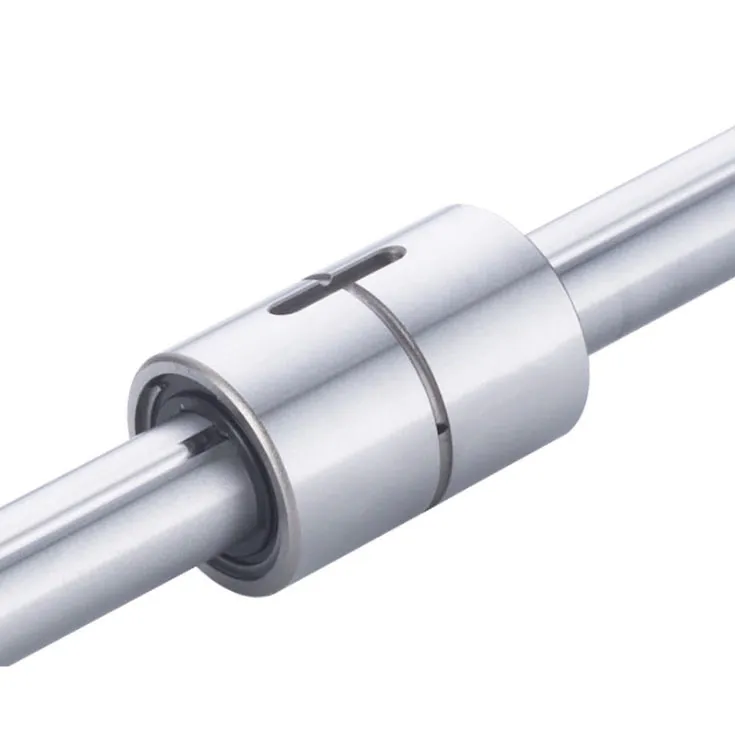
Key Considerations for Vendor Comparison:
| Feature/Criteria | Leading Manufacturer A (e.g., YDMotion) | Manufacturer B (Typical) | Manufacturer C (Budget) |
|---|---|---|---|
| Product Range & Variety | Extensive (standard, high-load, integrated ball screw spline) | Moderate (common sizes/types) | Limited (basic types) |
| Accuracy Grades Offered | P0, P1, P2 (ISO/JIS Certified) | P1, P2 | P2 (or unspecified) |
| Customization Capabilities | High (material, length, coating, integrated designs) | Moderate (length, minor modifications) | Low (standard products only) |
| Quality Certifications | ISO 9001, CE, RoHS | ISO 9001 | Basic/Self-certified |
| Technical Support & R&D | Strong engineering team, design assistance | Standard support, limited R&D | Basic customer service |
| Lead Times (Standard Products) | 1-3 weeks | 2-5 weeks | 4-8 weeks |
| Price Point | Premium (reflecting quality/service) | Mid-range | Budget-friendly |
Customized Solutions for Unique Requirements:
Many applications demand more than off-the-shelf components. Reputable manufacturers of ball spline systems excel in providing customized solutions, which can include:
- Specific Shaft Lengths and Diameters: Tailored to fit exact machine dimensions.
- Unique Nut Configurations: Including flange types, mounting patterns, or integrated housing designs.
- Special Materials: Use of stainless steel for corrosion resistance, or specialized alloys for high-temperature applications.
- Advanced Surface Treatments: Coatings for enhanced wear resistance, lubricity, or environmental protection (e.g., against chemicals, moisture).
- Integrated Systems: Development of combined ball screw spline units that offer synchronized linear and rotary motion, optimizing space and performance.
- Preloading & Clearance Adjustments: Fine-tuning to achieve specific rigidity and backlash characteristics for critical applications.
Collaborating with a manufacturer that possesses deep engineering expertise and robust R&D capabilities ensures that these specialized requirements are met with precision and reliability.
Real-World Application Case Studies
The practical benefits of ball spline technology are best illustrated through its successful implementation in demanding industrial scenarios.
Case Study 1: Robotic Assembly for Automotive Components
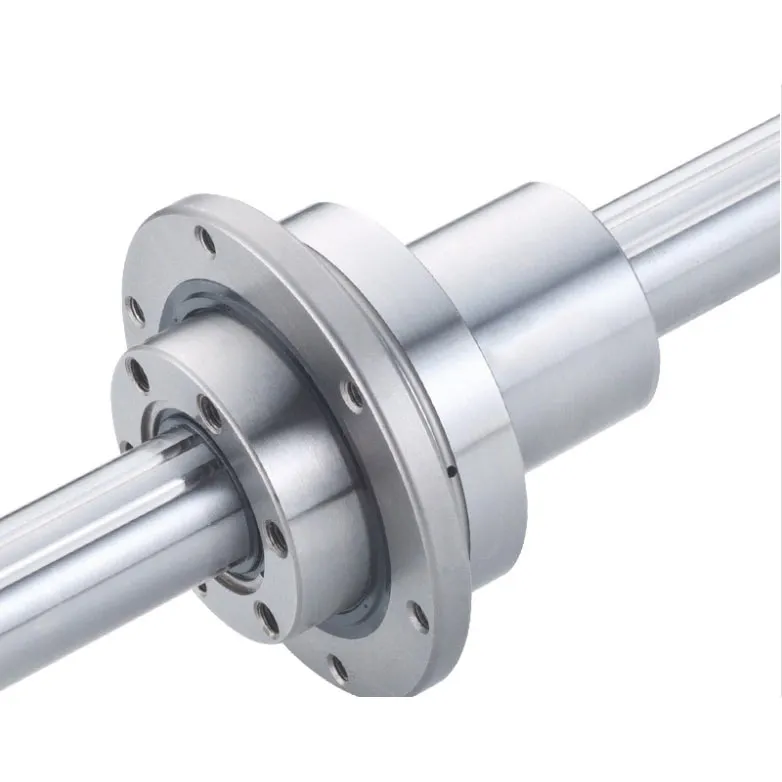
A leading automotive manufacturer needed to upgrade its robotic assembly line for engine components, specifically for a task involving inserting and then rotating a shaft into a housing with tight tolerances. Traditional linear guides and separate rotary actuators led to complex designs, increased weight, and synchronization challenges. By integrating an LBS series ball screw spline, the system achieved simultaneous linear insertion and controlled rotation using a single compact unit. This reduced the number of components by 30%, improved assembly cycle time by 15%, and enhanced overall positional accuracy, leading to a significant reduction in defects and an impressive energy saving due to the combined efficiency.
Case Study 2: Precision Wafer Handling in Semiconductor Manufacturing
In a high-throughput semiconductor fabrication plant, robotic end-effectors for wafer transfer required exceptionally smooth, vibration-free linear motion coupled with precise angular alignment. Vibrations or inaccuracies could lead to costly wafer damage. The implementation of a preloaded ball spline system with a specialized non-recirculating nut design, crafted from a low-outgassing material, provided the necessary rigidity and smooth motion. This reduced micro-vibrations by 40% and improved alignment accuracy by 25%, resulting in higher yield rates and minimizing contamination risks in the cleanroom environment.
Case Study 3: Automated Tool Changer for CNC Machining Centers
A machine tool builder sought to improve the speed and reliability of the automated tool changer in their high-performance CNC machining centers. The existing system suffered from wear-induced backlash and slower-than-desired tool change times. By utilizing a compact, high-rigidity ball spline for the tool magazine's linear traverse and a robust ball spline shaft for the individual tool retrieval and rotation mechanism, the system's efficiency was dramatically enhanced. Tool change times were cut by 20%, and the increased rigidity ensured precise tool seating, extending tool life and improving machining accuracy.
Featured Product Spotlight: LBS Ball Screw Nut And Ball Spline Shaft-LBS30UU
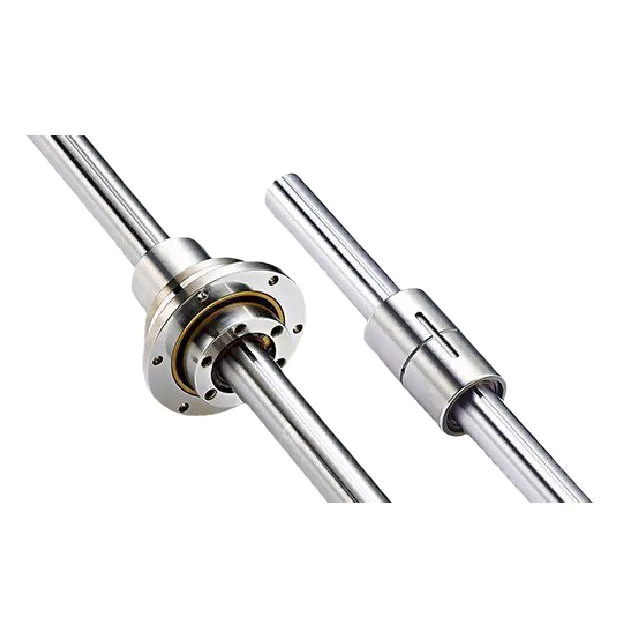
The LBS series exemplifies innovative motion control, particularly with the LBS Ball Screw Nut And Ball Spline Shaft-LBS30UU. This integrated unit offers a synchronized solution for applications requiring both linear motion from a ball screw and simultaneous rotational motion from a ball spline. The LBS30UU model is engineered for robust performance in medium to heavy-duty industrial environments.
Key Features and Benefits of LBS30UU:
- Combined Functionality: Provides both linear and rotary motion on a single shaft, simplifying machine design and reducing overall footprint.
- High Precision: Manufactured to stringent accuracy standards, ensuring precise positioning and repeatability for critical applications.
- Rigidity: Designed with optimal ball recirculation and preloading to deliver high rigidity, minimizing deflection under load.
- Durability: Constructed from high-strength, heat-treated alloy steel for extended service life and reliable operation.
- Smooth Operation: Low-friction rolling elements ensure smooth, quiet motion and reduced energy consumption.
LBS30UU Specific Specifications (Illustrative):
| Parameter | Unit | LBS30UU Value | Description |
|---|---|---|---|
| Shaft Diameter | mm | 30 | Nominal diameter of the integrated shaft |
| Ball Screw Lead (L) | mm | 5, 10, 20 (selectable) | Linear travel per rotation |
| Spline Dynamic Torque (Ct) | N·m | 150 | Max. continuous transmissible torque |
| Ball Screw Dynamic Load (Ca) | N | 20,000 | Basic dynamic axial load rating |
| Accuracy Grade (Ball Screw) | - | C5, C7 | Lead accuracy grade per ISO 3408 |
| Accuracy Grade (Ball Spline) | - | P1, P2 | Rotational accuracy grade |
| Nut Type (Ball Spline) | - | Cylindrical Flange | Common mounting configuration |
Ensuring Trust and Authority: FAQs, Logistics, and Support
At YDMotion, commitment to Google standards (Expertise, Experience, Authoritativeness, and Trustworthiness) is paramount. We strive to provide not only superior ball spline products but also comprehensive support and transparent business practices.
Frequently Asked Questions (FAQs):
Q: What is the primary advantage of a ball spline over a traditional spline?
A: The primary advantage is the use of recirculating balls, which converts sliding friction into rolling friction. This results in significantly lower friction, higher efficiency, minimal backlash, longer service life, and greater precision and rigidity compared to traditional splines.
Q: Can ball splines operate in corrosive or high-temperature environments?
A: Standard ball spline units are typically designed for general industrial environments. However, for corrosive or high-temperature applications, we offer customized solutions using stainless steel, specialized coatings, and high-temperature lubricants or materials. Please consult our engineering team for specific requirements.
Q: How do I select the correct ball spline for my application?
A: Selection depends on critical parameters such as required torque, linear load, desired accuracy, stroke length, speed, and environmental conditions. Our technical team can assist in performing detailed calculations and recommending the optimal ball spline shaft and nut combination to meet your specific needs.
Lead Time and Fulfillment:
We maintain a robust inventory for standard ball spline products, typically ensuring a lead time of 1-3 weeks for shipping. For customized solutions or large-volume orders, lead times will be communicated clearly during the quotation process, usually ranging from 4-8 weeks depending on complexity and material availability. Our logistics team works diligently to ensure timely and efficient delivery worldwide.
Warranty Commitments:
YDMotion stands behind the quality of its products. All ball spline and ball screw spline products come with a standard 12-month warranty from the date of purchase, covering manufacturing defects and material failures under normal operating conditions. Extended warranty options are available upon request. Our commitment to quality is reinforced by adherence to international standards like ISO 9001.
Dedicated Customer Support:
Our dedicated customer support team and experienced engineers are available to assist with product selection, technical inquiries, installation guidance, and troubleshooting. We offer comprehensive pre-sales consultation and responsive after-sales service to ensure optimal performance and customer satisfaction throughout the product lifecycle. Contact us via phone, email, or through our website for prompt assistance. Our years of service in the precision linear motion industry equip us with the experience to handle complex challenges.
Conclusion: The Future of Precision Motion
The ball spline remains an indispensable component in the relentless pursuit of precision and efficiency in industrial automation. Its ability to combine linear movement with torque transmission, coupled with benefits such as low friction, high rigidity, and extended service life, positions it as a cornerstone technology for current and future manufacturing demands. As industries continue to evolve towards higher speeds, greater accuracy, and enhanced energy efficiency, the role of advanced linear motion solutions like the ball spline will only become more critical. Investing in high-quality, expertly manufactured ball splines from reputable vendors ensures robust performance, reduced downtime, and a significant competitive advantage in an increasingly automated world.
Citations
- ISO 3408-1:2006. Ball screws — Part 1: Vocabulary and designation. International Organization for Standardization.
- JIS B 1192:2000. Ball splines — General rules. Japanese Standards Association.
- ASM Handbook, Volume 4: Heat Treating. ASM International, 1991.
- Industrial Motion Control: Advanced Technologies and Applications. Siemens AG, 2022.
- Lubrication Engineering. Society of Tribologists and Lubrication Engineers (STLE) Journal.