Understanding the Linear Rail Profile: A Practical Perspective
Having spent a good chunk of my career knee-deep in the industrial equipment world, I’ve come face to face with all kinds of linear motion components. But the linear rail profile still holds a special fascination. It’s one of those quietly crucial parts that many folks overlook until it’s time to pick the right one for a job — and trust me, not all rails are created equal.
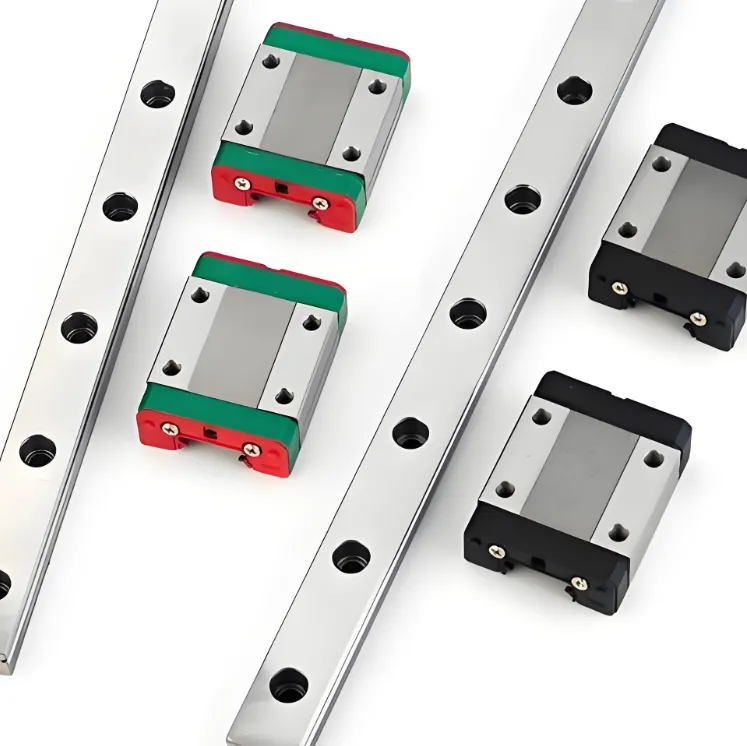
In real terms, a linear rail profile is the cross-sectional shape and design of the rail used in linear motion systems. These rails guide rollers or sliders with precision, bearing heavy loads smoothly along a straight path. When you think about machines humming in factories, 3D printers or CNC routers, chances are they’re relying on these profiles to maintain rigidity and repeatability.
Over the years, I noticed several patterns. For instance: the rail’s profile affects not only the load capacity but also stiffness and resistance to contaminants. Oddly enough, a seemingly small difference in shape or material can mean the difference between a machine running flawlessly for years or requiring annoying downtime for adjustments and repairs. For that reason, understanding what’s inside a rail profile is half the battle.
| Specification | Characteristic |
|---|---|
| Material | High-carbon steel, often heat-treated for hardness |
| Profile Type | Square, round, or miniature variants depending on application |
| Load Capacity | From a few hundred Newtons to several kN, based on size |
| Surface Treatment | Chrome plating, black oxide, or nitriding to resist wear |
| Tolerance | Micrometer levels, critical for high-precision industries |
One anecdote that sticks with me: a client once struggled with a packaging line jittering under high speed. Swapping out their outdated linear rails for those with a sharper, tighter profile drastically improved stability — and that saved them thousands in lost production. It really hammered home how these profiles aren’t just specs on paper; they’re integral to real-world performance.
Now, about vendors. If you’re selecting a linear rail supplier, you’ll quickly find the market divided among quality, price, and support. Here’s a quick rundown of a few common ones we’ve tested or recommended:
| Vendor | Profile Range | Load Ratings | Additional Features | Price Range |
|---|---|---|---|---|
| YDMotion | Wide, including miniature & square rails | Up to 20 kN | Custom profiling, corrosion resistance options | Moderate |
| Brand A | Standard profiles | Up to 15 kN | Basic corrosion protection | Low |
| Brand B | Limited profile types | Up to 10 kN | Warranty & technical support | High |
One thing I always advise: don’t pick a linear rail just on price or datasheet numbers alone. Talk to the supplier, get samples if possible, and consider your environment. Some profiles do better in dusty settings; others excel when grease or lubricant is impractical.
Frankly, the interplay between profile design, material choice, and application specifics is what makes this field endlessly interesting. It’s not just about moving straight — it’s doing so consistently, accurately, and without fuss for thousands of hours. Intricate but utterly essential.
If you want to dive deeper or source some reliable options, linear rail profile expertise like YDMotion’s can be a great place to start.
So, next time you look at a machine gliding smoothly on those rails, remember — it’s the profile underneath making it all possible. Worth thinking about, right?
References:
- ISO 10285–2018: Linear motion rolling bearings – Profile rail guides
- Practical Machine Design, R. L. Norton, 6th Edition
- Industry Case Studies from YDMotion Testing Reports