Understanding the linear motion guide way: Insights from the Industrial Floor
Having clocked more than a decade in the industrial equipment sector, I often find that the humble linear motion guide way is a quiet hero behind a heap of precision machinery. You don’t always hear about it outside engineering circles, but it’s at the center of countless operations — from CNC machining centers to automated assembly lines.
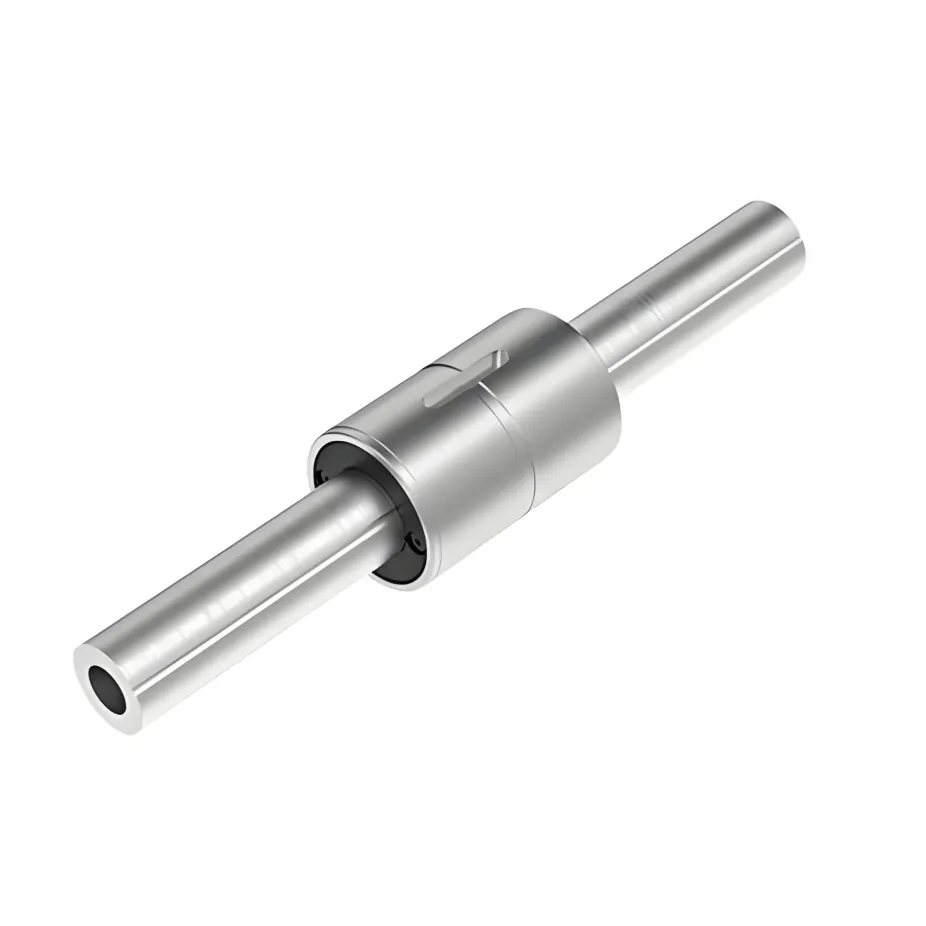
Now, what’s fascinating about these guide ways is how they manage to combine simplicity with exacting performance. At first glance, it’s a straight rail and some ball bearings. But get anyone who’s worked with varying quality levels, and you’ll hear how the details really matter. Material choice, manufacturing precision, and even testing routines each shape the reliability and smoothness of the motion.
Oddly enough, there’s quite a bit of artistry involved in the engineering here. For example, many linear guide rails are made from meticulously hardened steel. This heat treatment isn’t just for show — it enhances wear resistance dramatically, enabling these guides to maintain precision over years. In fact, I once visited a factory where their rails had been running trouble-free for over five years without any replacement or major maintenance. That kind of longevity, frankly, is priceless.
In real terms, what you’re looking for when selecting a linear motion guide way is often a balance: load capacity vs. smoothness, durability vs. cost, and customization vs. standardization. Many manufacturers offer a range of profile types including compact, heavy-duty, and even corrosion-resistant versions for challenging environments.
Let me share a quick anecdote: A customer once needed a unique length and carriage width for a robotic arm in an automated packaging line. After some back-and-forth with the vendor’s tech team, they delivered a custom guide way that fit perfectly, improving assembly speed and reducing vibration. Stories like these always underline how customization in this space isn’t just a bonus — it can be a game changer.
| Spec | Value | Notes |
|---|---|---|
| Rail Material | GCr15 Bearing Steel | Heat treated for hardness (55-62 HRC) |
| Load Capacity | Up to 15,000 N | Depends on model/size |
| Accuracy Grade | P, H, C Grades | Precision levels defined by ISO 10243 |
| Operating Temperature | -20°C to +80°C | Standard working range |
| Lubrication | Grease & Oil | Periodic maintenance required |
From a vendor standpoint, it’s worth knowing that most big players offer similar basic product lines but differ in supporting services, customization, and pricing. I’ve found that sorting through their specifications can be a bit like comparing apples and oranges unless you know the subtle distinctions.
| Supplier | Product Range | Customization | Lead Time | Typical Pricing |
|---|---|---|---|---|
| YDMotion | Standard & Custom Profiles | High-Level Tailoring Available | Usually 2–4 weeks | Competitive Mid-Range |
| Supplier A | Mostly Standard Sizes | Limited | 1–3 weeks | Lower |
| Supplier B | Wide Variety, Including Heavy-Duty | Moderate | 3–6 weeks | Higher-End |
As you can guess, it pays to spend time aligning your project goals with your supplier’s strengths. I noticed that partnerships tend to be most effective when there’s a solid channel for technical FAQ and a willingness to tweak designs together.
Finally, the way these guide ways are tested often separates the best from the rest. Precision measurement tools gauge straightness, flatness, and smoothness. I recall a colleague showing me how some manufacturers perform accelerated life testing by cycling their carriages thousands of times under load — it’s impressive stuff and guarantees a kind of confidence you just don’t get from brochures.
So, whether you’re retrofitting a machine or designing a high-stakes automated system from scratch, never underestimate the impact of picking the right linear motion guide way. It’s one of those foundational decisions that quietly but profoundly shapes your success.
Takeaway? In industry, the smoothest moves often hide in the smallest details.
References:
1. ISO 10243 – Rolling Bearing Accuracy
2. Industry factory visit notes, 2023
3. YDMotion product manuals and technical support resources