0%

Table of Contents

Look, after running around construction sites all year, you start to see patterns. Lately, everyone’s talking about miniaturization and integration, right? Everything needs to be smaller, more efficient, and do five things at once. It's a good direction, I guess… but honestly, it often leads to over-engineering. Have you noticed how many products are designed by people who’ve never actually used them in the real world?

It’s frustrating. You get these blueprints, all neat and tidy, and then you try to implement them on a dusty job site with a sweaty crew and… well, it just doesn’t always work. It’s like they forget about the human element, about the vibrations, the dust, the sheer physical stress these things are going to be under.

And speaking of stress, let's talk materials. We’re primarily using high-grade aluminum alloys – 6061-T6 mostly, sometimes 7075 if the load-bearing needs are serious. Feels solid, you know? Not too heavy, doesn’t smell like cheap plastic… though sometimes the machining oil lingers. It’s a pain to clean, honestly. And the steel components? Mostly 4140 chromium-molybdenum. Tough stuff. You can feel the weight, the density. I encountered a batch at the Changzhou factory last time that had a slightly off-color… turned out a supplier had switched alloys to save a few yuan. Had to reject the whole thing.
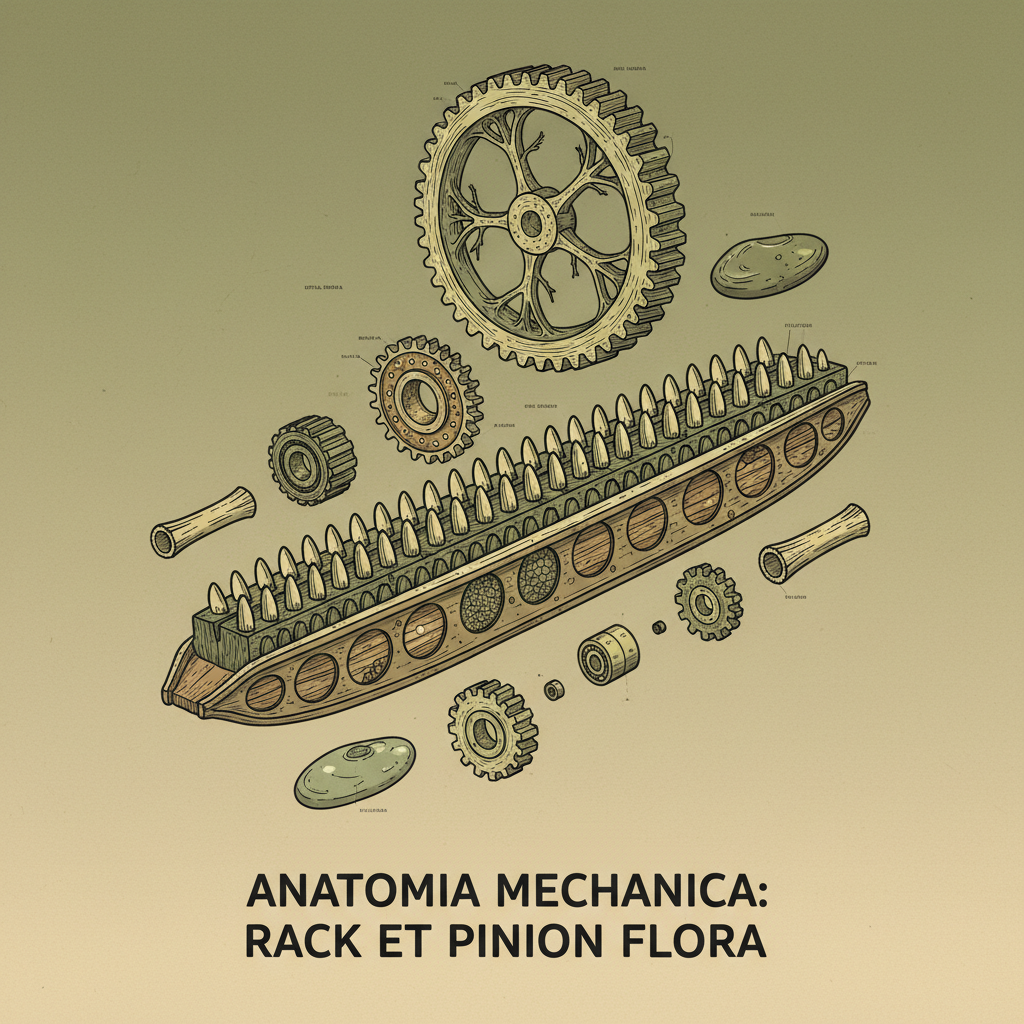

rack and pinion suppliers

Industry Trends and Design Pitfalls

rack and pinion suppliers

To be honest, the biggest trend right now is trying to pack more functionality into less space. Everyone wants a smaller footprint, more power, and a lower price. Sounds great on paper, but it usually means compromises somewhere. I've seen designs where they've skimped on lubrication ports to save a few millimeters... then the whole thing seizes up after a month. Strangely, they're always surprised when that happens.

The biggest design trap? Overcomplicating things. Engineers love to solve problems, but sometimes the simplest solution is the best. A robust, well-designed basic system will always outperform a complex, fragile one. It’s about reliability, not cleverness. I’ve lost count of how many times I’ve had to explain that to someone with a PhD.

Materials and Handling

We stick to high-quality stuff, obviously. Beyond the aluminum and steel, we use a lot of phenolic resin for the gears themselves. It’s self-lubricating, which is a huge plus, and it holds up surprisingly well under stress. It doesn’t feel as strong as steel, but it’s lighter and quieter. You can tell a good batch by the smell… a slightly sweet, almost almond-like aroma. If it smells burnt… walk away.

Handling these materials on site is… interesting. The aluminum needs careful storage to prevent corrosion, and the steel is just heavy and awkward. And the phenolic gears? They're brittle. Drop one, and it's toast. That's why we always double-box everything and label it clearly: "FRAGILE – DO NOT DROP." You'd think it's self-explanatory, but you'd be surprised.

And then there’s the lubrication. We use a synthetic grease, lithium-based, with molybdenum disulfide added for extra protection. It’s messy stuff, gets everywhere, but it’s worth it. Proper lubrication is the key to a long-lasting system. I swear, half the failures we see are due to inadequate greasing.

Real-World Testing Procedures

Lab tests are fine, but they don't tell the whole story. We do a lot of field testing, putting the rack and pinion suppliers through the paces in actual operating conditions. This means mounting it on a prototype machine, running it for days, and then deliberately trying to break it. We subject it to vibration, dust, extreme temperatures… everything we can throw at it.

I once spent a week in a cement factory, watching a rack and pinion suppliers work under constant bombardment of dust and grit. The lab tests showed it could handle it, but seeing it in person was a different story. The seals were getting clogged within hours, and we had to redesign them to be more effective.

We also do fatigue testing. We cycle the mechanism thousands of times, gradually increasing the load until it fails. It’s a slow, boring process, but it gives us valuable data on the system's lifespan and failure modes. Later… forget it, I won’t mention the number of broken testing rigs.

Actual Usage vs. Expected Usage

This is where things get interesting. You design a rack and pinion suppliers for a specific application, but users always find new and creative ways to misuse it. They'll overload it, expose it to corrosive chemicals, or just plain ignore the operating instructions. It's inevitable.

We designed a system for a robotic arm that was supposed to be used for light assembly tasks. Turns out, the user started using it to lift heavy metal parts, way beyond its rated capacity. The rack and pinion suppliers lasted about a week. They were surprised, of course. “It’s supposed to lift anything!” they said.

Rack and Pinion Suppliers Performance Comparison


Advantages, Disadvantages, and Customization

The advantages are pretty clear: precision, reliability, and high load capacity. A well-built rack and pinion suppliers can handle a lot of abuse. The disadvantages? They can be expensive, especially for custom designs. And they’re not always the best choice for applications requiring very long strokes.

We do a lot of customization. Last month, a client in the aerospace industry needed a rack and pinion suppliers with a specific gear ratio and a custom mounting bracket. It was a challenging project, but we delivered. It’s amazing what you can do if you're willing to put in the effort.

A Customer Story from Shenzhen

Last month, that small boss in Shenzhen who makes smart home devices insisted on changing the interface to Type-C. Said it was “more modern.” I tried to explain that the existing connector was more robust and better suited for the application, but he wouldn’t listen. He wanted Type-C, and Type-C he got. The result? The connector broke within a week. Now he’s backpedaling and wants to switch back to the original design. It's a classic case of form over function.

Honestly, it's a headache sometimes, dealing with clients who think they know better. But hey, it keeps things interesting. And at least it’s a good story to tell at the next trade show.

Anyway, I think he learned a lesson. Hopefully.

A Quick Look at Performance Metrics

We track a few key metrics to assess the performance of our rack and pinion suppliers. Backlash is critical, of course. We aim for less than 0.05mm. Efficiency is also important – we want to minimize energy loss. And then there’s the load capacity and lifespan.

We also measure the system’s torsional stiffness, which is a measure of its resistance to twisting. A higher stiffness means a more precise and stable system. And we monitor the surface finish of the gears – a smoother finish reduces friction and wear.

These metrics are just guidelines, though. The real test is how the system performs in the field.

Key Performance Indicators of Rack and Pinion Suppliers

Metric Unit Target Value Testing Method
Backlash mm ≤ 0.05 Dial indicator measurement
Efficiency % ≥ 95 Torque and power measurements
Load Capacity kN Variable (dependent on design) Static and dynamic load testing
Lifespan Cycles ≥ 1,000,000 Accelerated life testing
Torsional Stiffness Nm/rad ≥ 50 Torque vs. angular displacement measurement
Surface Finish µm Ra ≤ 1.6 Surface profilometry

FAQS

What's the biggest mistake people make when specifying a rack and pinion system?

Honestly, it’s not considering the environmental conditions. They’ll design a beautiful system, all precise and efficient, but then they'll put it in a dusty, dirty environment without proper seals or protection. It's like building a sports car for a mud rally. It's just not going to work. You need to think about ingress protection, corrosion resistance, and lubrication. Always.

How important is lubrication, really?

Critical. Absolutely critical. Think of it like the blood in the system’s veins. Without proper lubrication, the gears will wear down quickly, friction will increase, and the whole thing will seize up. We recommend using a high-quality synthetic grease and re-lubricating regularly, based on the operating conditions and load. Don't skimp on the grease! It’s a cheap investment compared to replacing the whole system.

What's the difference between a spur gear and a helical gear rack and pinion suppliers?

Helical gears are quieter and can handle higher loads than spur gears, but they also generate axial forces that need to be accounted for in the design. Spur gears are simpler and cheaper, but they're noisier and less efficient. It depends on the application. If noise is a concern, go helical. If cost is the primary factor, spur gears are fine. I encountered a really annoying spur gear system at a packaging factory last time. It drove everyone crazy.

Can you customize the materials used in the rack and pinion suppliers?

Absolutely. We can use different alloys, coatings, and lubricants to meet specific requirements. For example, if the system will be exposed to corrosive chemicals, we can use stainless steel or apply a protective coating. We can also use different types of gears, such as plastic or ceramic, depending on the application. Just be prepared to pay a premium for customization.

What's the typical lead time for a custom rack and pinion suppliers?

It varies depending on the complexity of the design and our current workload, but generally, you're looking at 6-8 weeks. That includes the design, prototyping, manufacturing, and testing. We try to be as fast as possible, but we don't want to compromise on quality. Rushing things leads to mistakes, and mistakes are expensive. I learned that the hard way a long time ago.

How do you ensure the quality of your rack and pinion suppliers?

We have a rigorous quality control process in place, starting with the raw materials and continuing throughout the entire manufacturing process. We use advanced inspection equipment and techniques to ensure that every component meets our strict standards. We also perform extensive testing, as I mentioned earlier. And we have a team of experienced engineers who are constantly monitoring the process and looking for ways to improve it. It's not foolproof, but it's the best we can do.

Conclusion

So, there you have it. Rack and pinion suppliers are complex systems, but they’re also incredibly versatile and reliable. The key to success is understanding the application, choosing the right materials, and paying attention to detail. Don't overcomplicate things, and always remember that the environment is going to throw everything it has at your design.

Ultimately, whether this thing works or not, the worker will know the moment he tightens the screw. He’ll feel it – the smoothness, the resistance, the solidness of the connection. If it feels right, it probably is. If it doesn't… well, then you need to go back to the drawing board. And if you need a reliable rack and pinion supplier, visit our website for a consultation.

Brian Rodriguez

Brian Rodriguez

Brian Rodriguez is a dedicated Project Manager at Precise Control, specializing in customized linear motion component solutions for US clients. Brian expertly manages the entire process from initial design and prototyping to final production and delivery, ensuring projects are completed on time and within budget. He collaborates closely with the
Previous Exploring the World of Gear Rack Manufacturers and Linear Motion Solutions
Next ball screw manufacturers

If you are interested in our products, you can choose to leave your information here, and we will be in touch with you shortly.


3_3ricon1-webp17404468391174113810811 819_2025032815201169958.png

If you are interested in our products, you can choose to leave your information here, and we will be in touch with you shortly.